Abode of Gods and Kings
The Preseli Hills of Southwest Wales are famed in the annals of archaeology as the source of the Stonehenge bluestones. But the area’s spotted dolerite is far from its only megalithic marvel . . .

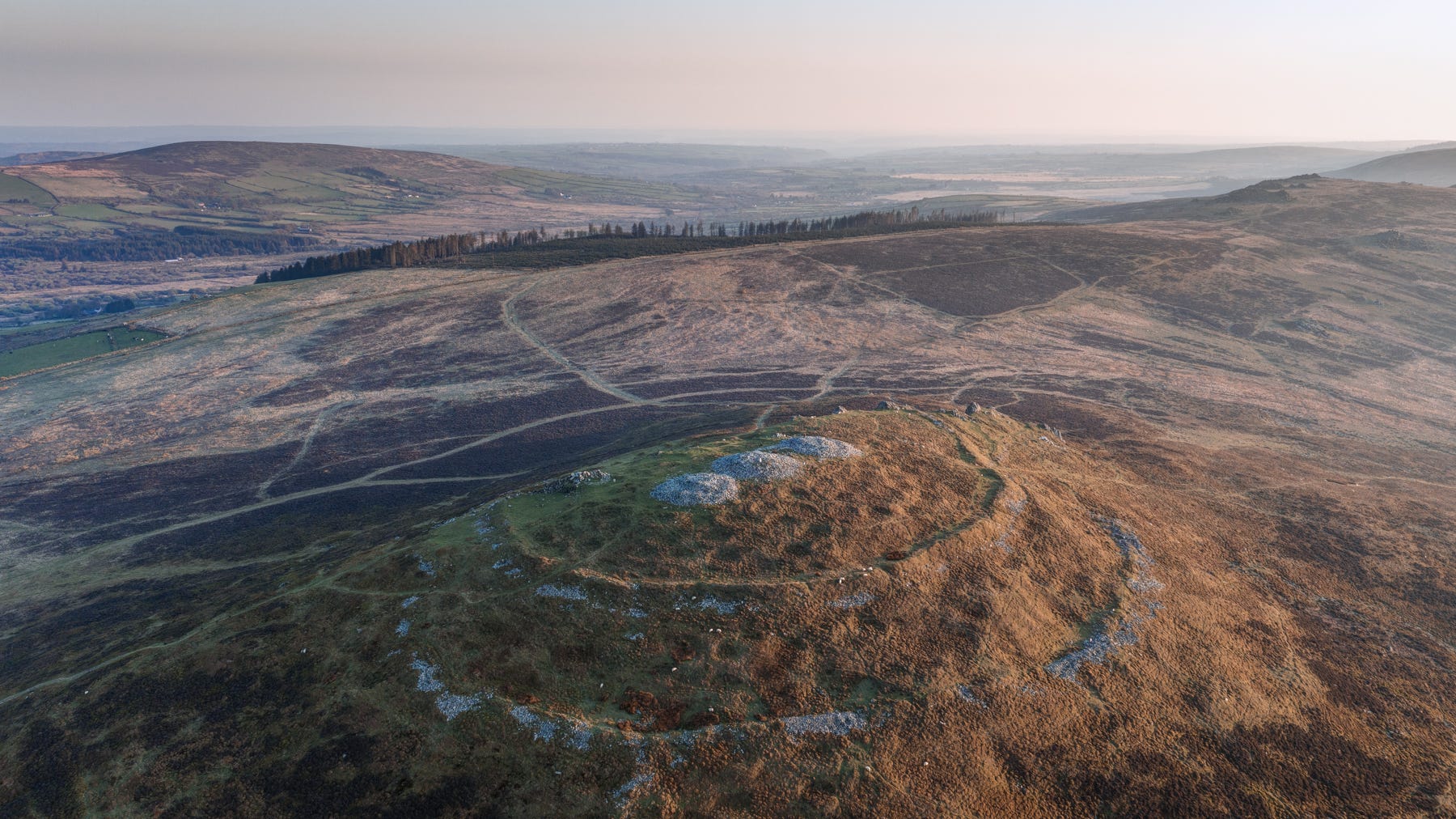
Sodden, remote and wreathed for much of the year in thick mist, the Preseli Mountains have about them the allure of a forbidden land. Very few paths and even fewer roads cross its high, undulating summit ridge, encrusted across its entirety with ancient burial and lichen-covered tors.
Stories swirl around this shadowy upland like wind-blown crows. It’s the kind of place people through the ages won’t have ventured to without a good reason. And those reasons probably wouldn’t often have been purely practical.
The traces left by our ancestors tell us that much, though they offer as many questions as they do answers. Why did Neolithic herders prize the flecked, blue-grey rock that occurs in serrated clusters on the eastern side of the Preselis? Was it because the spots and speckles in them resembled stars? Or a belief that bluestone held magical, healing properties? Perhaps the position of the outcrops, on the last tract of high ground before Wales tapers into the Irish Sea, was significant?
One thing that may be said with certainty is that the other-worldly feel of the Preselis fascinated our distant forebears just as much as it does us today. Evidence for this comes in the form of an arc of imposing dolmens, cup-marked stones and tombs, whose forms and orientation appear to pay homage to the great ridge (and, in at least two instances, actually mimic its form).
Thought to have been erected in the first few centuries of the fourth millennium BC, the dolmens in particular (known in Welsh as ‘cromlechs’) have attracted much scrutiny from antiquarians and archaeologists. Somewhat less research, however, has been directed at the sequence of gigantic, Early Bronze Age funerary cairns that adorn the hills. But they were all placed by their makers with great sensitivity to the landscape, drawing your attention to important features on the horizon, whether distant hilltops, distinctive landforms, or a pleasing symmetry in the line of the coast.
One of the best views of the massif is to be had from a tract of high ground running in parallel with it to the north, above the Nevern Valley. From the top of this natural grandstand, the full extent of the Preseli ridge is revealed in all its splendour. Admiring the view one chilly early April morning, I was struck by how conspicuous the bluestone tors (‘carns’ in Welsh) were from this vantage point, and how closely they resembled clumps of thistle or petrified barbs.
I was reminded of the legendary tale from the ‘Red Book of Hergest’, an ancient Welsh romance (part of the Mabinogion) in which the Preselis are identified as the site of an encounter between a massive, mythic boar, Twrch Trwyth, and his nemesis, Culhwch. Accompanied by a cohort of Arthurian heroes, Culhwch is hunting the animal as part of a quest to win the hand of Olwen, daughter of the Giant King, Ysbaddaden Pencawr: the King has declared that Culhwch must bring him the magical shears and blades sprouting from the brow of the great pig so that he can shave off his beard before the wedding.
After an epic chase around the hills and valleys of Pembrokeshire ensues, Culhwch slays the boar, removes the blades from between his ears and drives him to his death in the Severn Estuary, causing the summits of the Preselis to quake.
Scholars tend to debate the origins of this tale, and whether or not it diffused from Irish myth into Welsh folklore, or the other way around. But in so doing, they appear to have missed the evocative resemblance – glaringly obvious from the Neolithic sites above the Nevern Valley – between hog’s-back summit ridge of Preselis, with its jagged outcrops of dolerite, and the shears and blades bristling from Culhwch’s forehead. Could the episode in the Mabinogion be an echo of a much older origin myth relating to the carns from which the Stonehenge bluestones were extracted 4,500 years ago? It is tempting to think so.
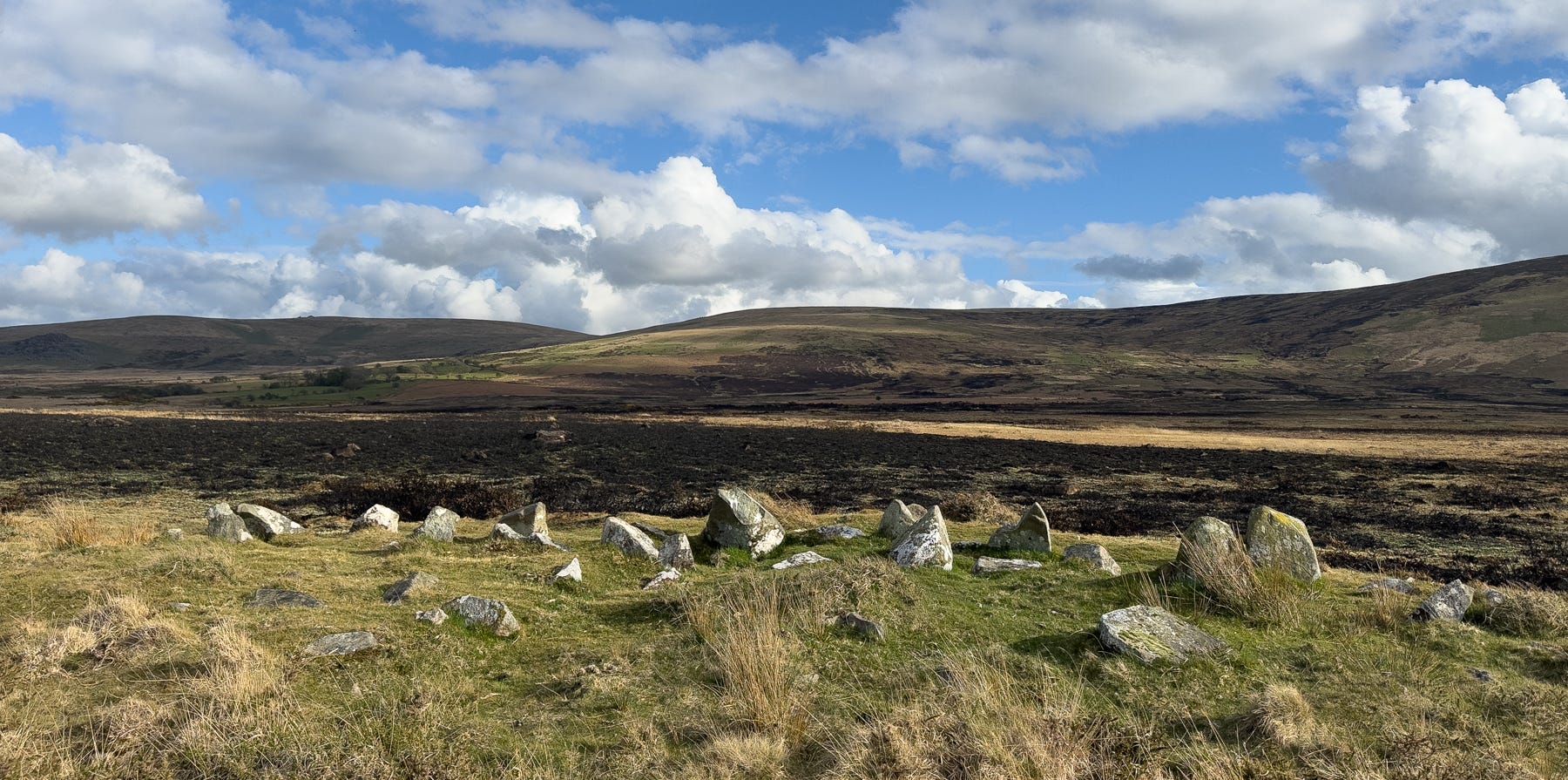
Bedd-yr-Afanc (aka ‘Bryn Berian’) - a type of tomb classed by archaeologists as a ‘gallery grave’ - sits in a raised plateau of bog, within sight of at least one Neolithic bluestone quarry and axe factory on the ridge above. It would originally have been covered with stones and at certain times of year is believed to have been surrounded by water.
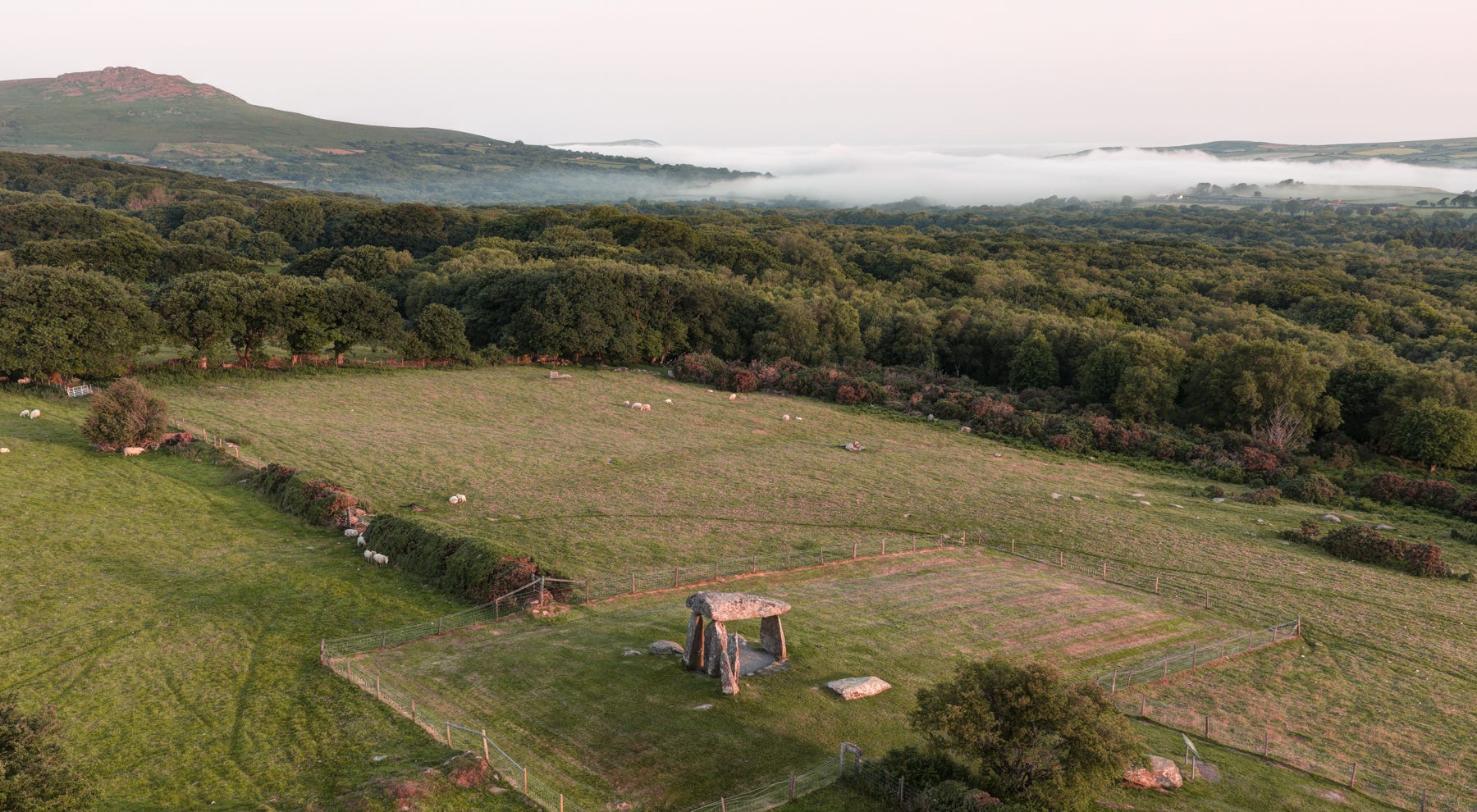
Sea mist rising up the Nevern Valley to engulf the Preselis’ most famous Neolithic cromlech, Pentre Ifan, pictured here on the morning of the summer solstice, 2025. The outline of the capstone mirrors that of Carn Ingli, the rocky hill to rear left.
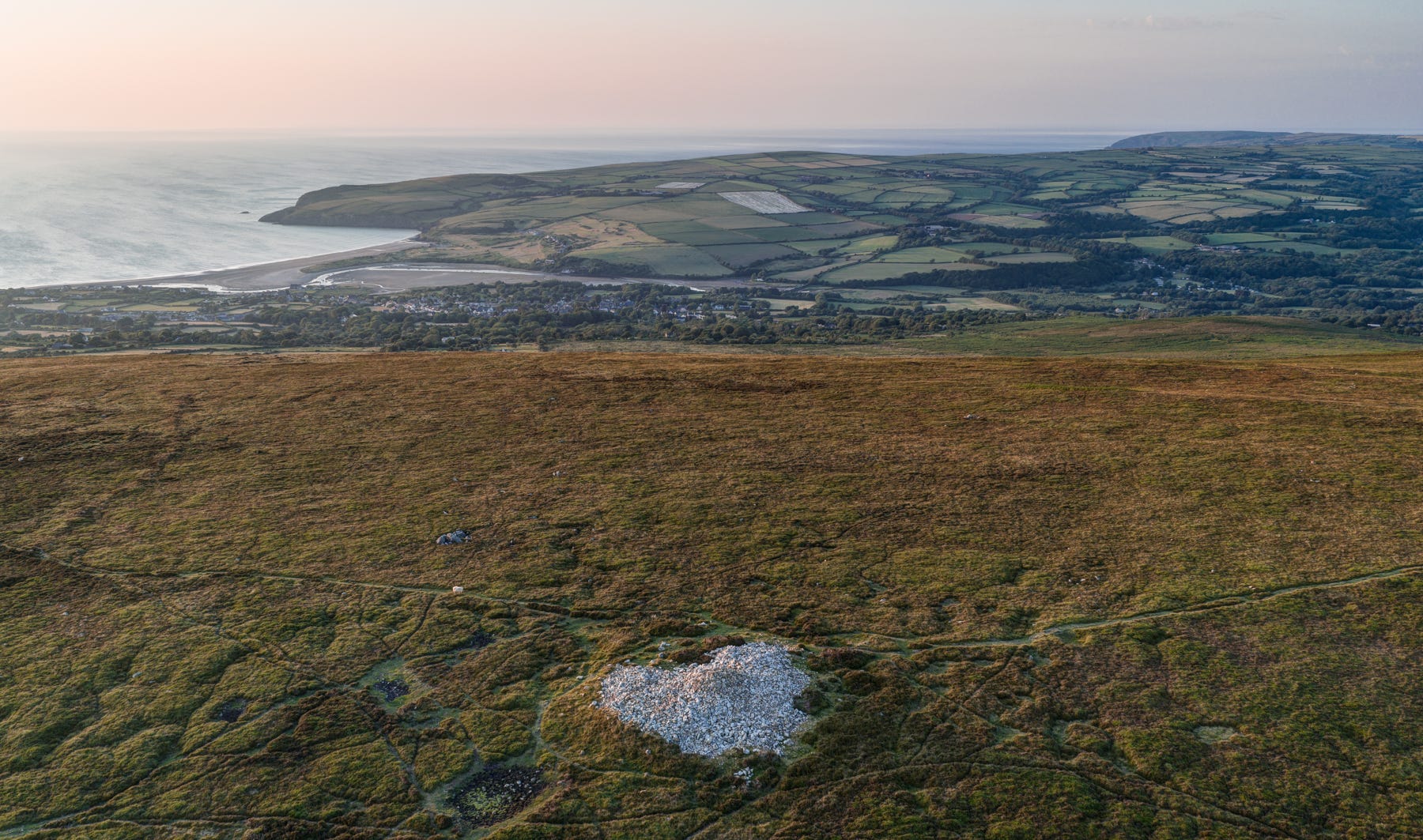
Early Bronze Age funerary cairn at Carn Ingli, overlooking the mouth of the Nevern Valley above the coastal village of Newport. Cairns like this, covering a central box of stone or ‘cist’, usually enclosed the cremated remains and grave goods of one individual - perhaps a member of a chiefly lineage or person venerated for their bravery in battle. Similar cairns are scattered at regular intervals over the Preseli Hills.
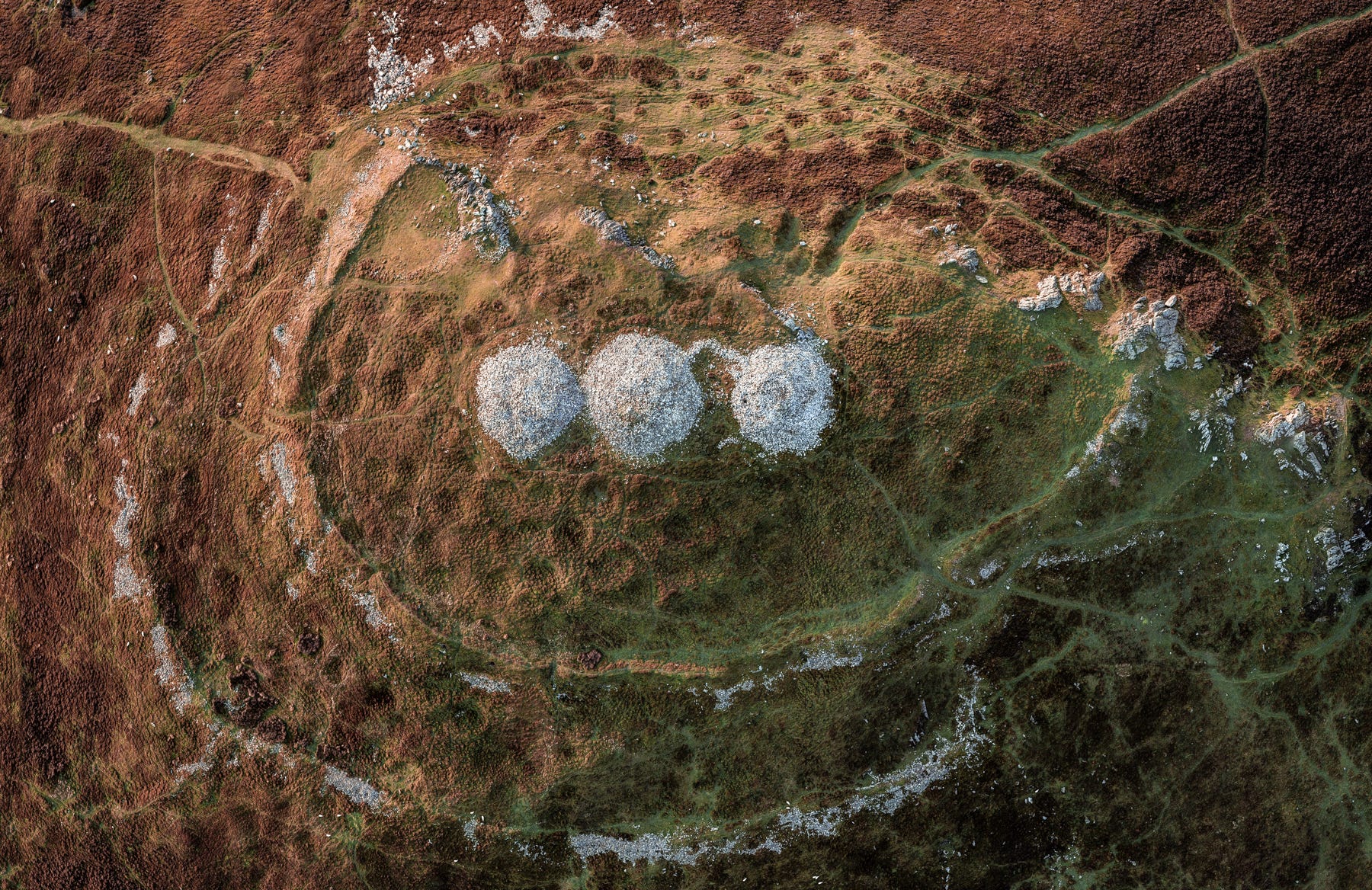
Wales’ most impressive Early Bronze Age cemetery - a trio of massive cairns on the summit of Foel Drygarn, above the village of Crymych, at the eastern edge of the Preselis. It is encircled by the walls of an Iron Age hillfort, built around 1,500 years after the cairns. Note the impressions of numerous hut circles, where thatched round houses would once have stood. It’s interesting to note that the cairns were not robbed to provide masonry for the ramparts, suggesting they were still venerated many centuries after being built.
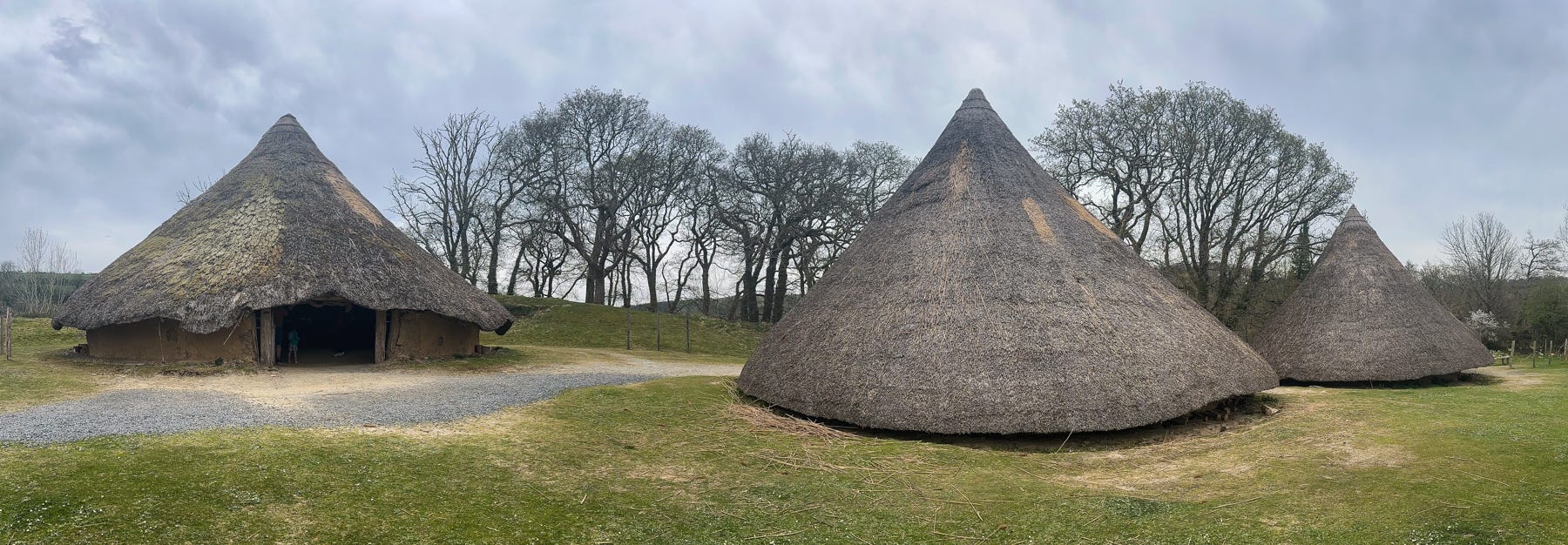
These reconstructed Iron Age huts at Castell Henllys in the Nevern Valley give a sense of what their Bronze Age equivalents on Foel Drygarn may have looked like, though these are considerably larger.
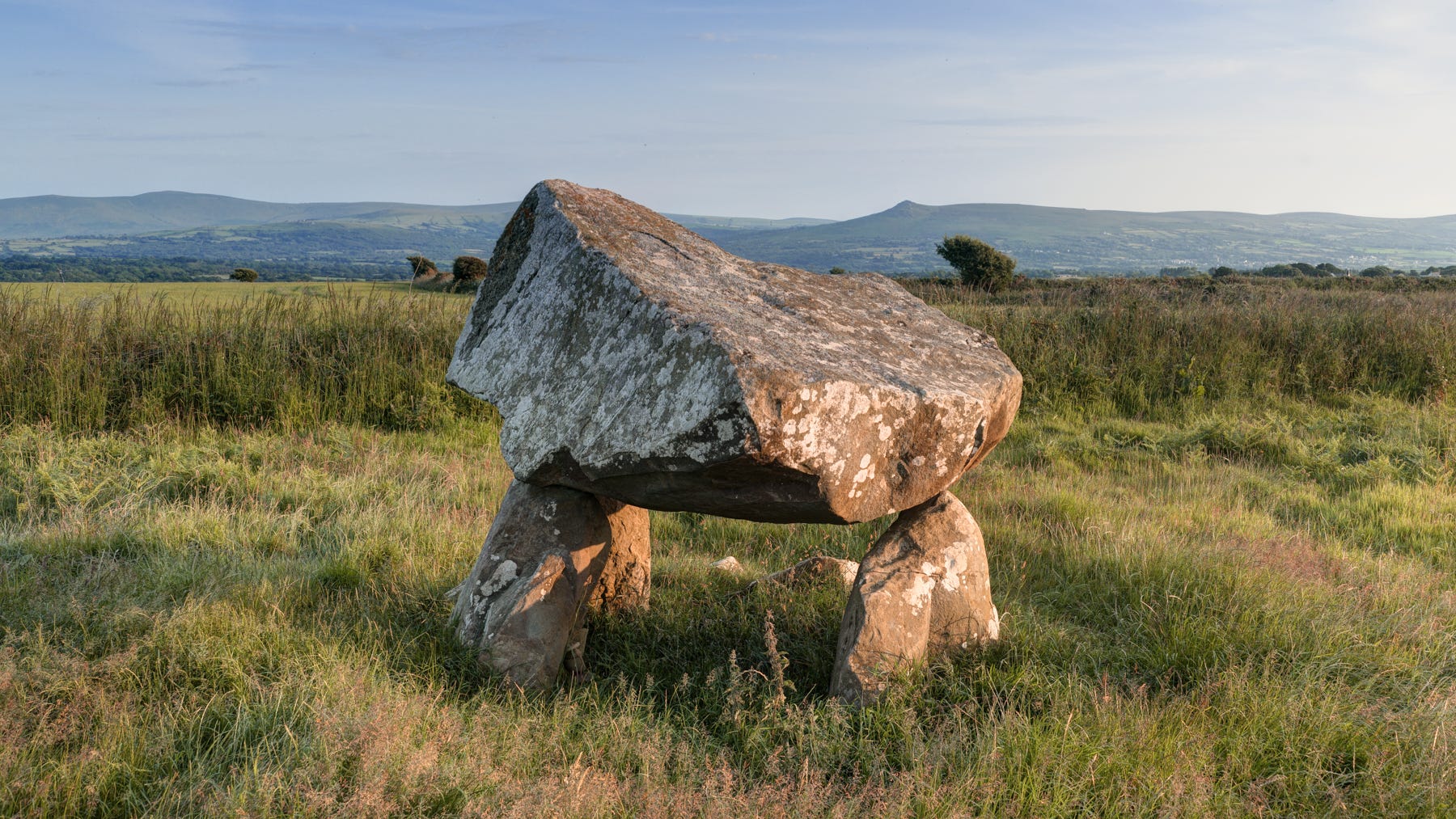
Llech-y-Tribedd (aka the ‘Altar Stone’ & ‘Samson’s Quoit’) enjoys a spectacular view of the Preselis’ northern flank. In common with most of the Early Neolithic tombs in the area, the profile of its capstone echoes that of Carn Ingli, on the horizon. The sea is not visible from the site.
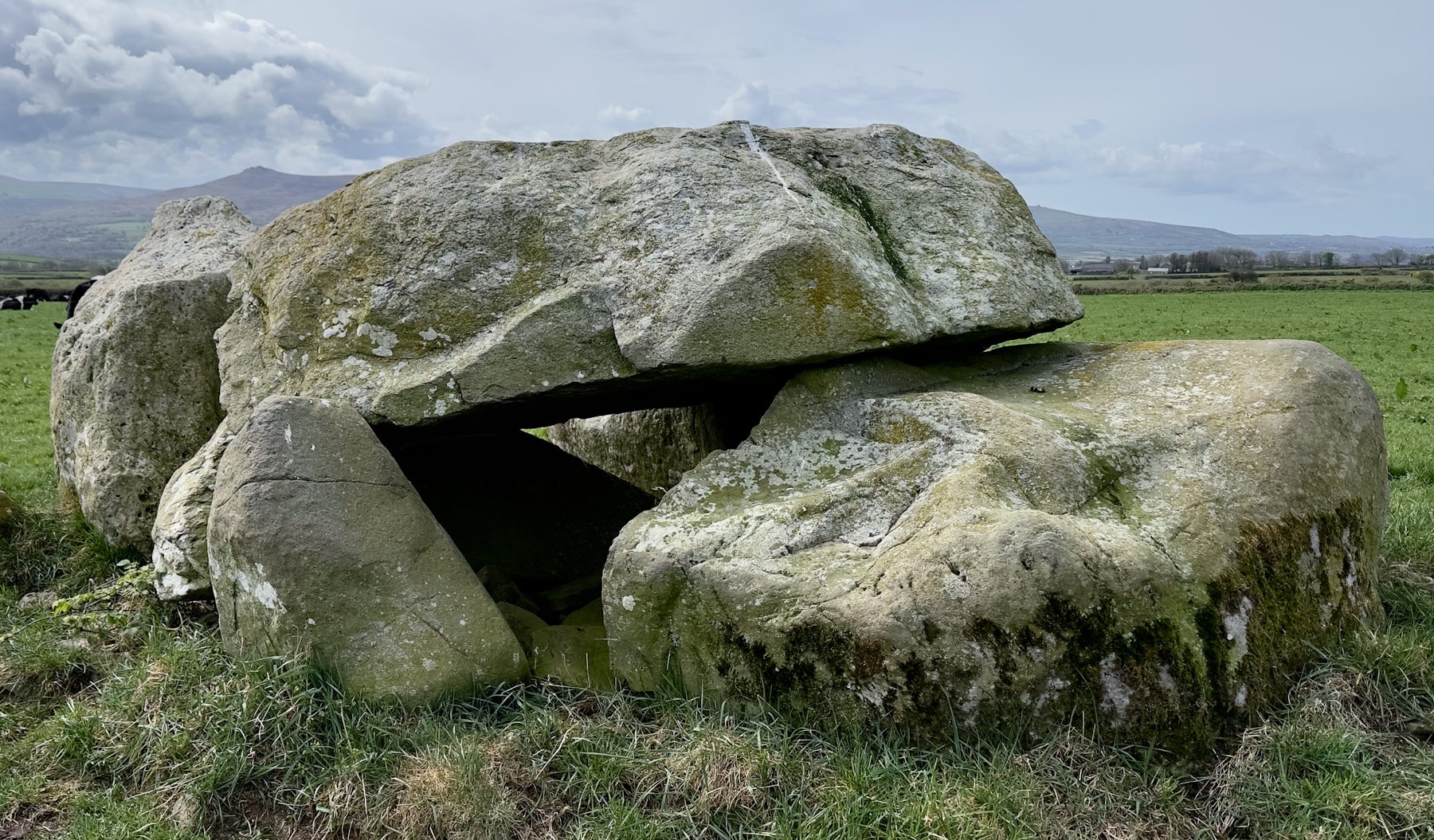
Before it collapsed in the 19th century, Trellyffaint was a portal dolmen with two separate chambers enclosed beneath an earth mound. It formed part of small ceremonial complex comprising a couple of circular pits surrounded by a low bank. More than seventy cup marks have been identified on its massive capstone.
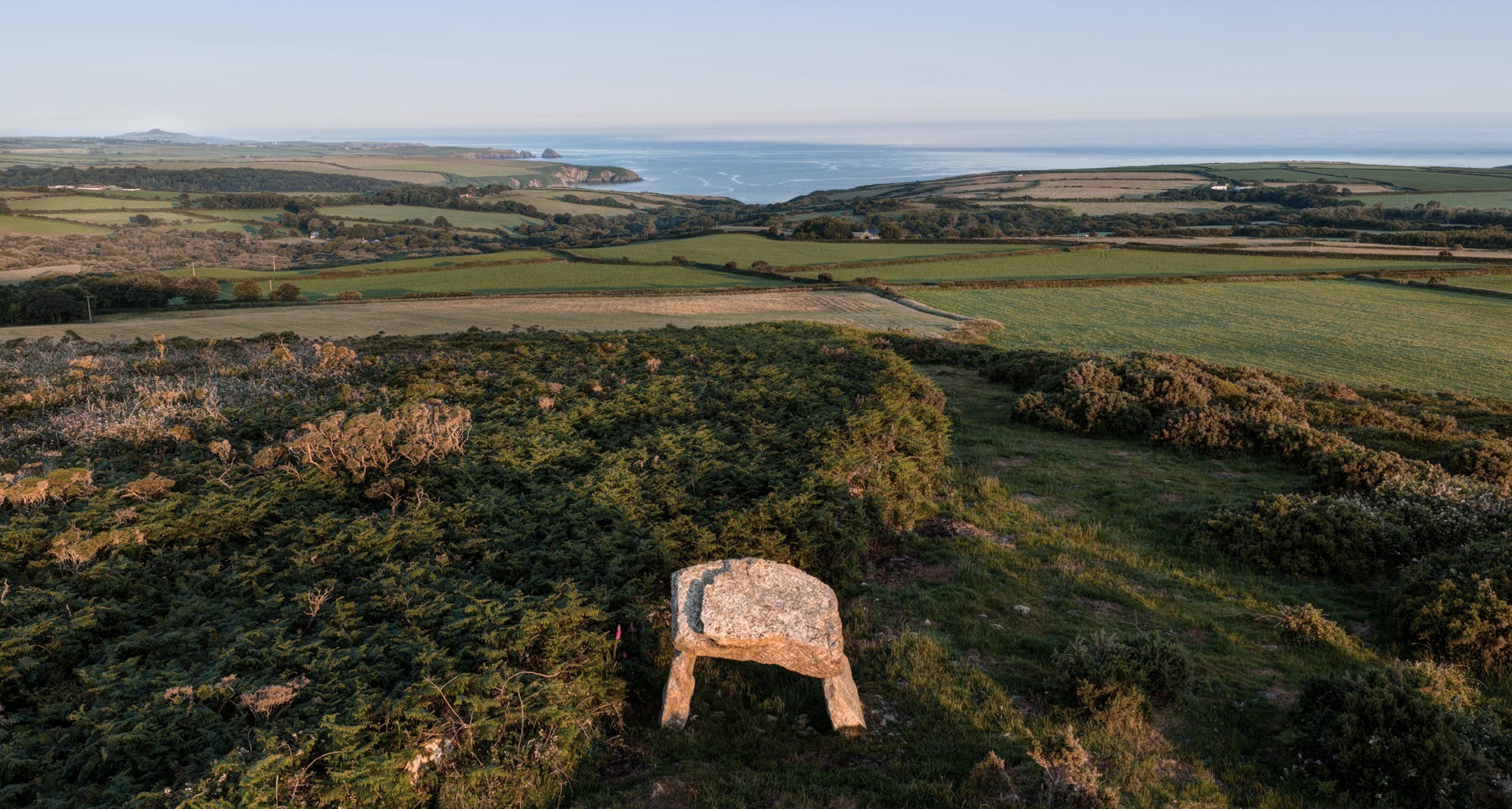
Resting on a high balcony, Ffyst Samson (aka ‘Trellys Cromlech’) enjoys superb panoramic views over the north Pembrokeshire coast. It may originally have been partly buried beneath a cairn, the stones from which were redeployed by subsequent generations to create the adjacent drystone wall. A solitary megalith, thought be contemporary with the cromlech, stands sentinel nearby.
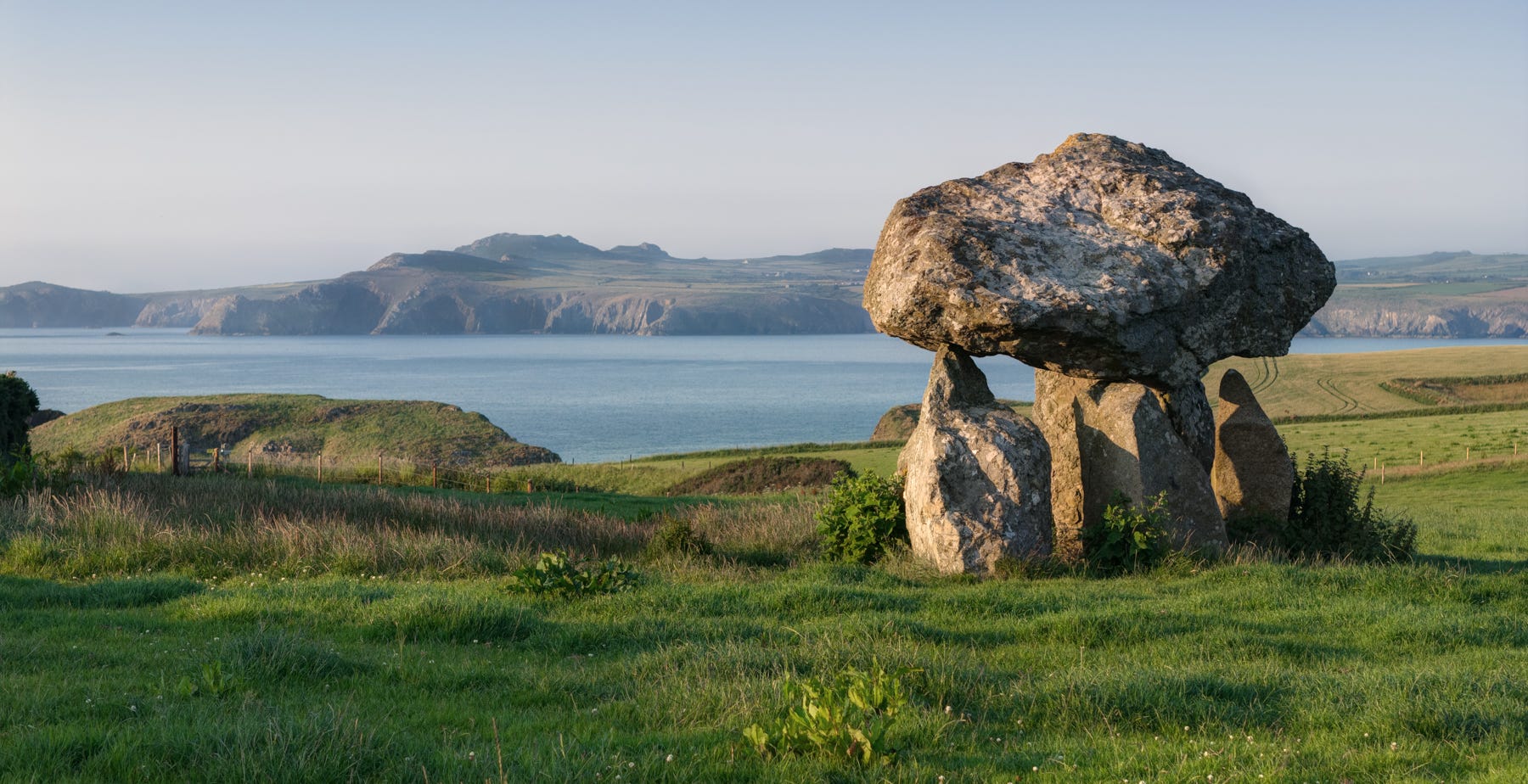
Carreg Samson (aka ‘the Longhouse’ or ‘Grave of Samson’s Finger’) occupies one of the loveliest spots of any Megalithic site in Europe, with glorious views across across the bay to Strumble Head. The top edge of the capstone tips towards the summit ridge of Garn Fawr in the distance, to which it bears a striking resemblance. Several of the hilltops visible from the cromlech have been identified as Neolithic funerary sites
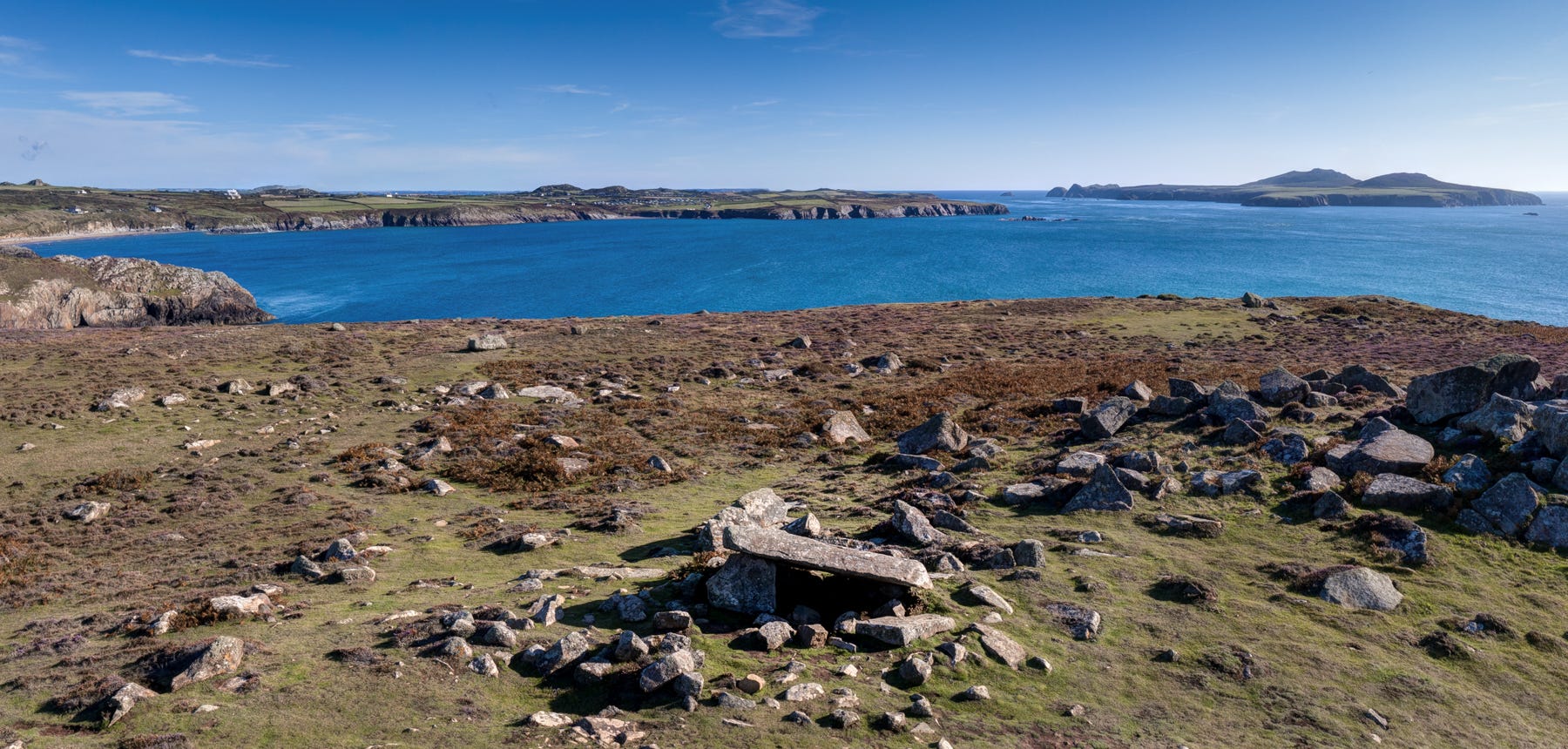
Coetan Arthur, a 45-minute walk from Whitesands Bay near St David’s, is the most prominent among a cluster of four Early Neolithic tombs in this area, which is dominated by a run of large rocky carns. Comprising a large capstone propped by several uprights, it lies among the cluttered remains of what may once have been its covering cairn. The placement, at a point on the headland where the monument is perfectly silhouetted as you crest the ridge of the hill to the south, appears to look towards nearby Carn Llidi rather than over the bay. Mesolithic flint scatters, a Bronze Age settlement and Iron Age promontory fort offer evidence of habitation dating back more than 7,000 years.
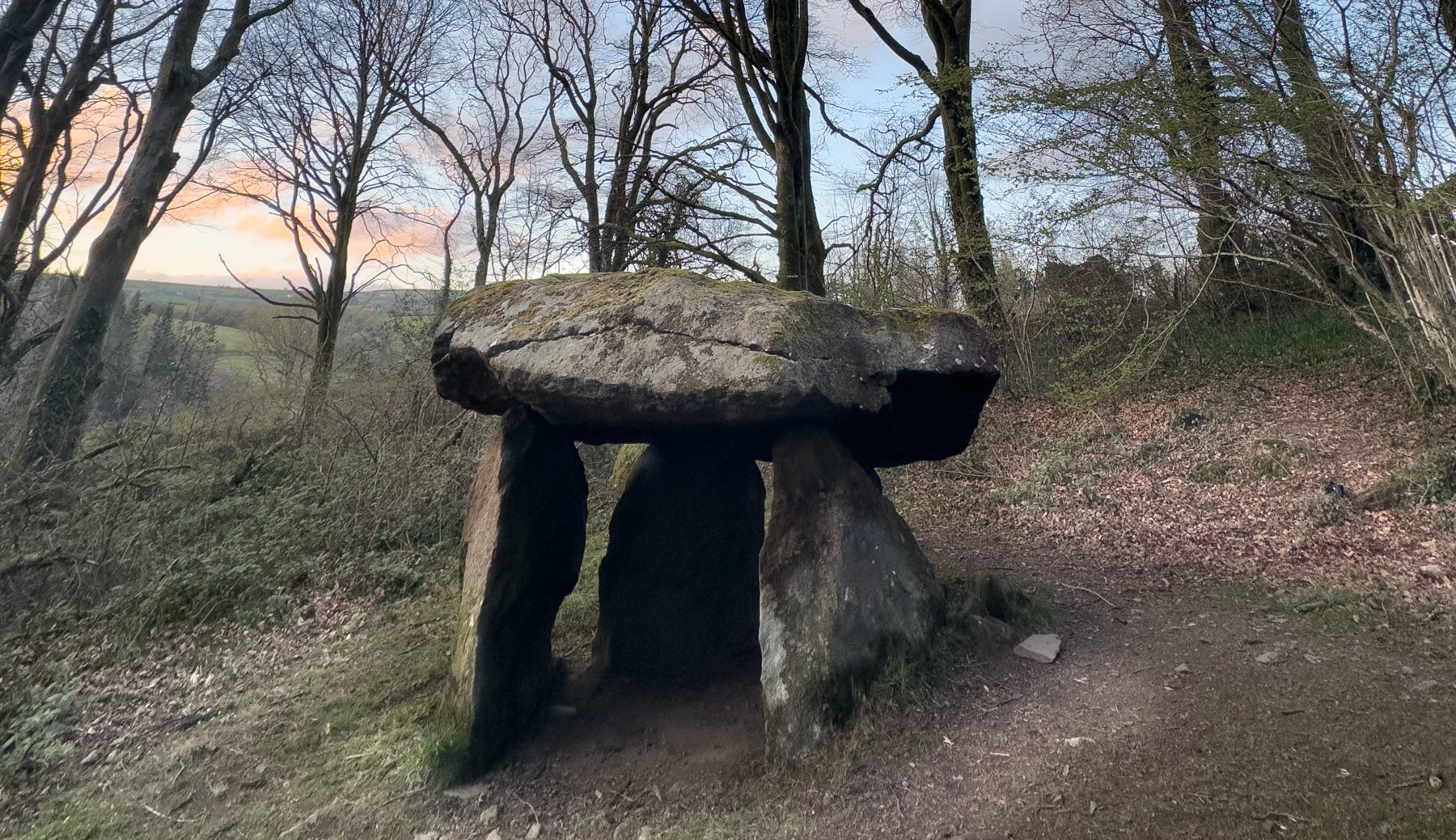
This impressive, four-legged cromlech, Gwal-y-Llandoidy (aka ‘Bwrdd Arther’ or ‘Dolwilym’) is tucked away on the eastern fringes of the Preselis, above a bend in the River Taf, where it flows over a series of noisy rapids. The crashing of the white water, the tomb’s mossy surfaces and woodland setting lend to the tomb a distinctive atmosphere.


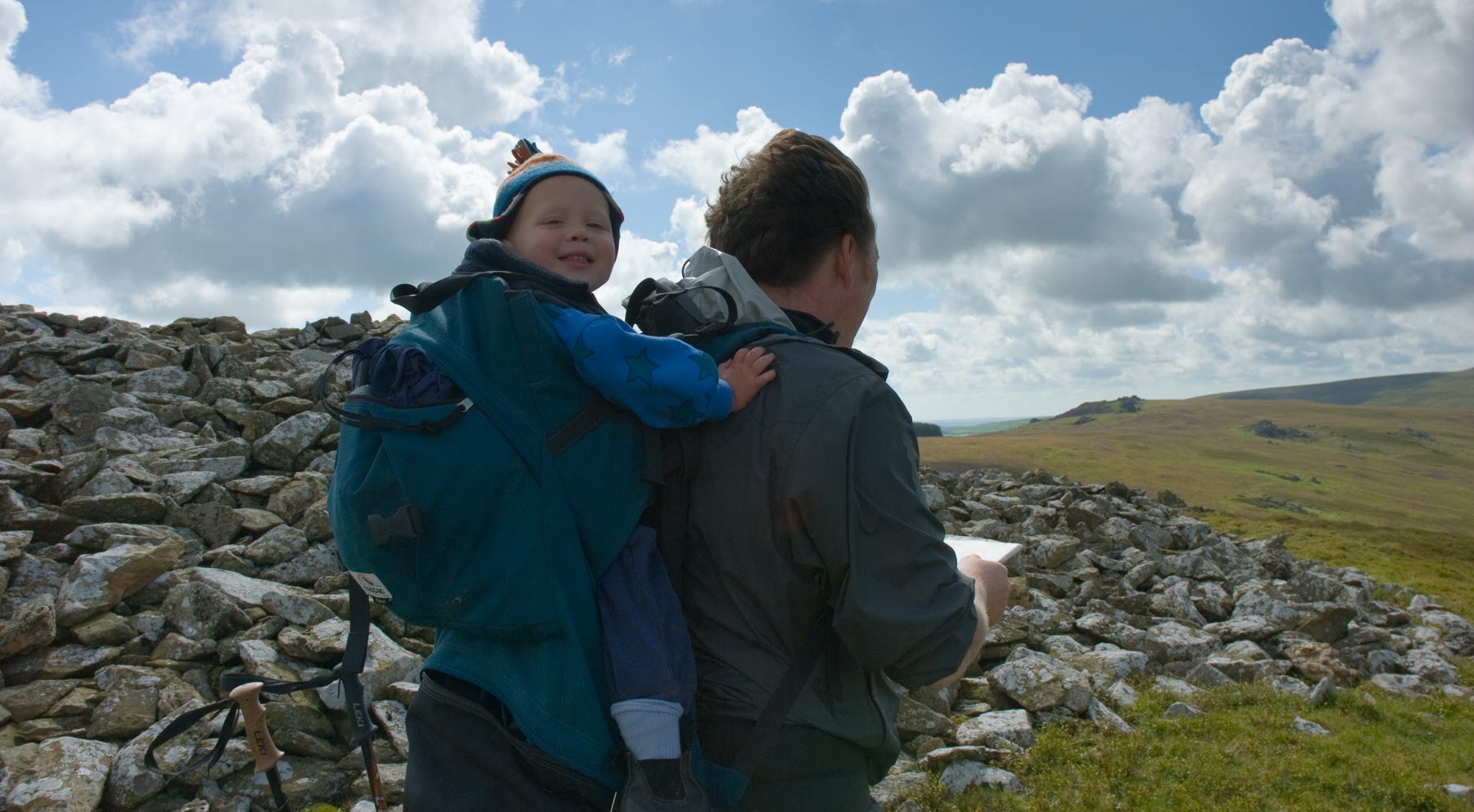
To conclude, a family photograph taken 18 years ago, looking from the mighty cairns of Foel Drygarn towards the bluestone outcrop at Carn Menyn, on the Preseli Ridge. The little three-month-old baby on my back, thoroughly enjoying the sunlight and breezes of his first proper hill walk, is, as I write, about to begin university.
It serves to underline something profoundly important about these sacred places - something rarely mentioned by archaeologists. Namely, the powerful way they provide continuity, binding us to both to the landscapes of our own lives, and to the people who inhabited those same landscapes several thousands years ago.
At moments like this, as I contemplate the passing of time and inevitability of change, I find great comfort in the knowledge that these funerary sites were special long before my own parents took me to them; that they will outlive us, and our children, and theirs; and that many generations to come will enjoy them in the same way as we have, lying in the long grass listening to the larks, gathering winberries and clambering with their toddlers among the rocks.
Thanks for reading to the end of this post. It offers a taste of the work I’m doing for my next book, ‘Barrowlands’, which explores forgotten prehistoric ceremonial landscapes around the UK, and what it means to live among them. If you enjoyed it, please recommend to friends and family members.
You can see lots more of my photographs and writing in the ‘Aerial Atlas of Ancient Britain’, published by Thames & Hudson. Signed copies are available via my website here. I also post video reels and galleries of stills on my Instagram
.
©Jenny Morgan
Fabulous David 👌✨
My children , now in their thirties, still tell of the tour of ancient stone circles, stone burial chambers in a freezing April across Wales. As a geologist I have encountered such across the world. Your pictures and stories are great