Bronze Age Barrows: A Beginner's Guide!
The Unsung Heroes of Prehistoric Britain

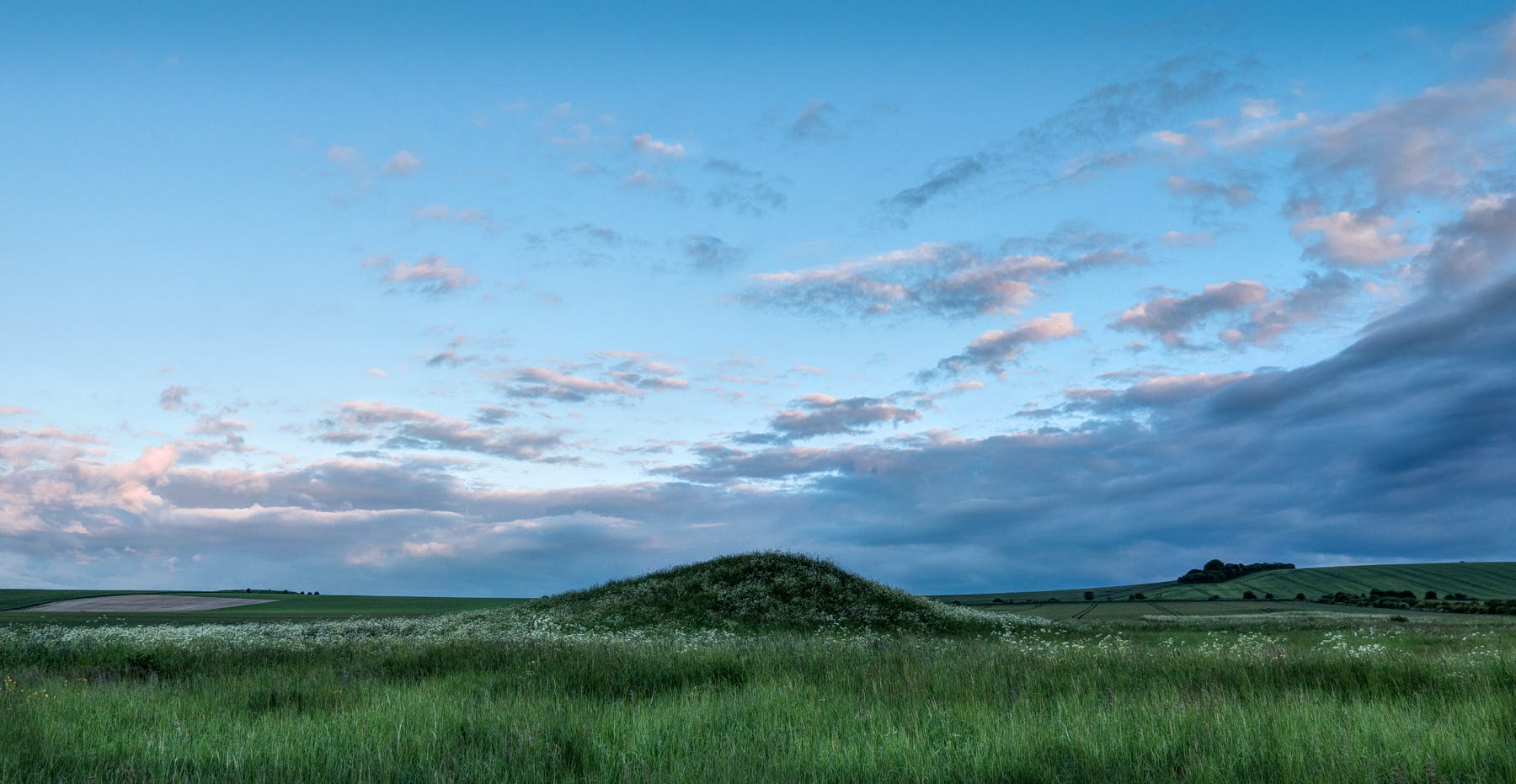
Welcome to my newsletter, which this month focusses on a class of monument that attracts far less acclaim than it deserves: the Bronze Age burial mound, or ‘barrow’.
If you’ve spent any time in rural Britain, you’ll be familiar with these grassy mounds, which the Welsh refer to as ‘twmps’, and which on OS maps are labelled as ‘tumuli’ (as they were known to the Romans). In parts of Dorset, the South Downs, Lincolnshire, the chalklands of Wessex and north Yorkshire, there are literally hundreds draped over ridges, clustered in fields or standing enigmatically on the tops of prominent hills. Further west and north, in regions where the soil is thinner, they are replaced by piles of stones, or ‘cairns’.
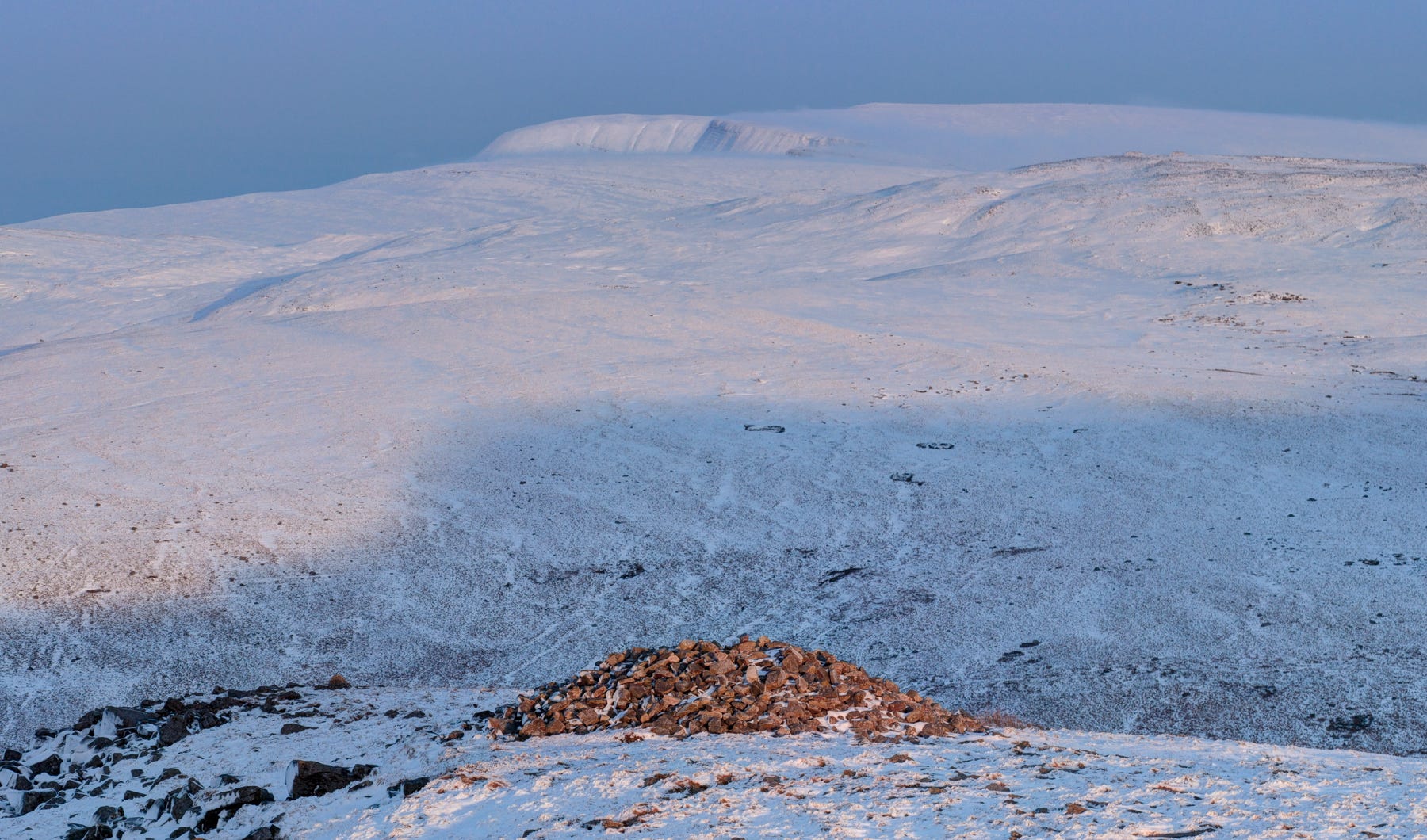
I first developed an interest in them back in the mid-noughties while researching a book of walks for the Ramblers that culminated in great viewpoints accessible only on foot. It was amazing how many special spots were crowned by barrows and cairns, as if our ancestors were responding to precisely the same qualities of landscape that appeal to us today (which of course was unquestionably the case).
What I didn’t appreciate back then was that these mounds nearly all originated in a specific and very important period of prehistory, when these islands were being colonized by incomers from continental Europe. Nor did I understand the subtle ways in which the structures related to the wider landscapes. Not until I started photographing them from the air did I realize barrows were keys capable of unlocking hidden geographies and long forgotten connections between places.
Now I’m more drawn to these sites than any other type of prehistoric monument, both because they make great photographs, and because they invariably present a puzzle. Work out why a mound or Bronze Age cemetery occupies the position it does (which may not always be immediately apparent at ground level) and you’ll discover something important about that patch of land and what surrounds it. Those eureka moments are truly wonderful, connecting you in a vivid way with the people who inhabited Britain 4,000 years ago, and unlike physical treasures, such insights don’t require any digging.
But first, some context . . . .
When were barrows made?
The oldest round mounds in Britain date from the Neolithic period, but the ones I’m particularly interested in date from a millennium later, in the Chalcolithic (‘Copper Age’) and Early Bronze Age. Around 2,200 BC (the time of the final phase of Stonehenge), the British landscape began to acquire large earthen barrows containing both inhumations, in the form of crouched burials, and cremated remains contained in elaborately patterned pots, or ‘beakers’.
DNA analysis has shown that the people interred in these structures shared a very different ancestry from their Neolithic neighbours – one originating in the Pontic-Caspian steppe way to the east. With their fairer hair, paler eye colours and complexions, these newcomers – known to previous generations of archaeologists as ‘the Beaker Folk’ after their decorated funerary urns – heralded the arrival of metal working in Britain, along with what appears to be a new set of beliefs, ritual practises, and styles of weapons and dress.
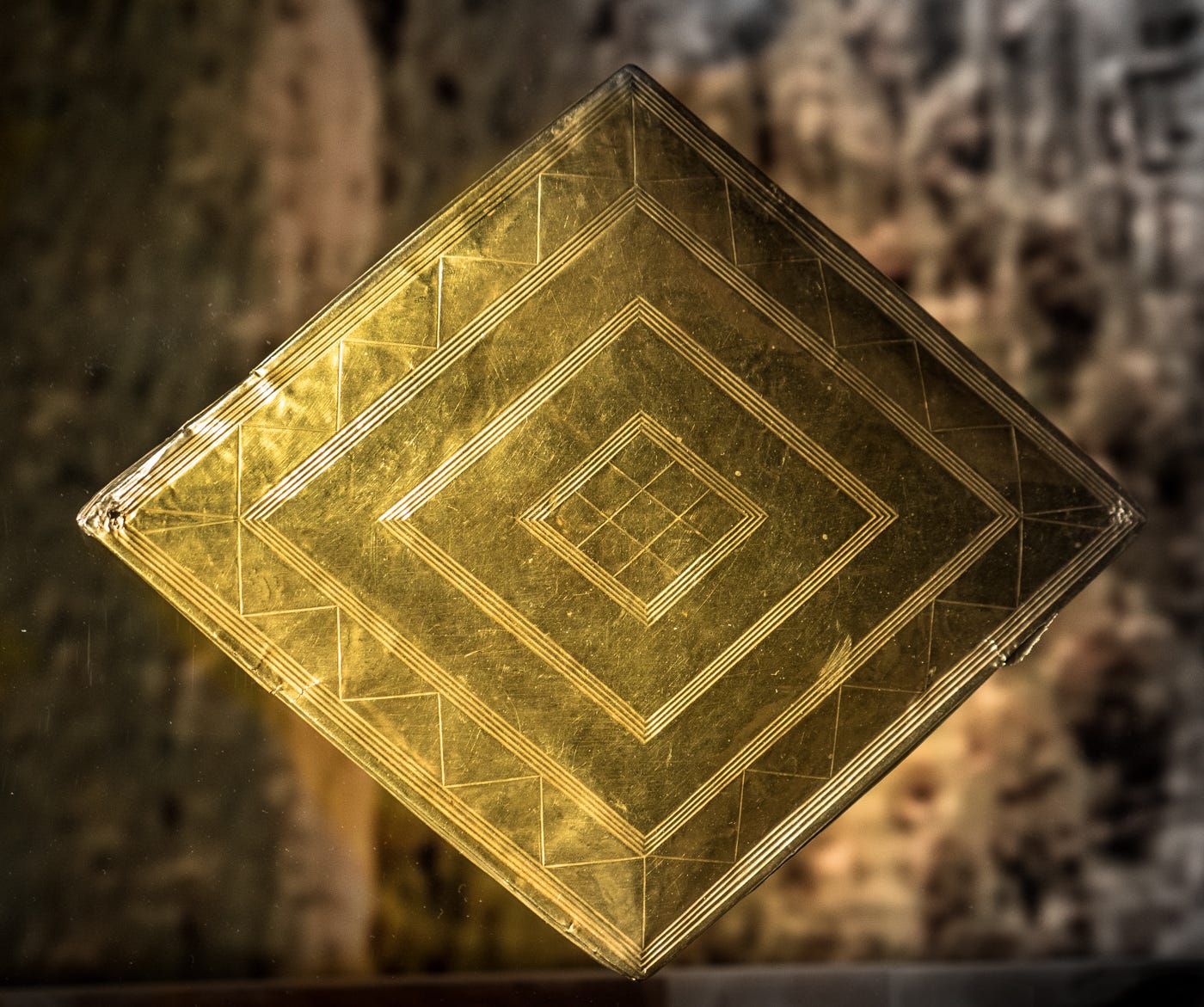
Beaker graves often contained an array of luxury goods, perhaps deposited as honorific gifts or to accompany the deceased on their journeys to the afterlife. These ranged from beautifully crafted and decorated copper knives to fancy polished stone maces, finely made tools, archery kit (notably writs guards and arrowheads), cast bronze axes and items of personal jewellery made from exotic substances such as amber, jet, faïence and even gold.
Burial mounds continued be built until roughly 1,600BC, when the practise became less widespread, disappearing altogether by the Iron Age.
How were they built?
In their simplest form, round barrows were piled up using earth excavated from a surrounding ditch. Sometimes, they were more structured, with alternating layers of stone and soil, or occasionally turf stripped from nearby pasture or heathland. Pollen analysis from these have enabled archaeologists to reconstruct the mix of plants that predominated in the landscape at the time the barrow was built.
Were there different types?
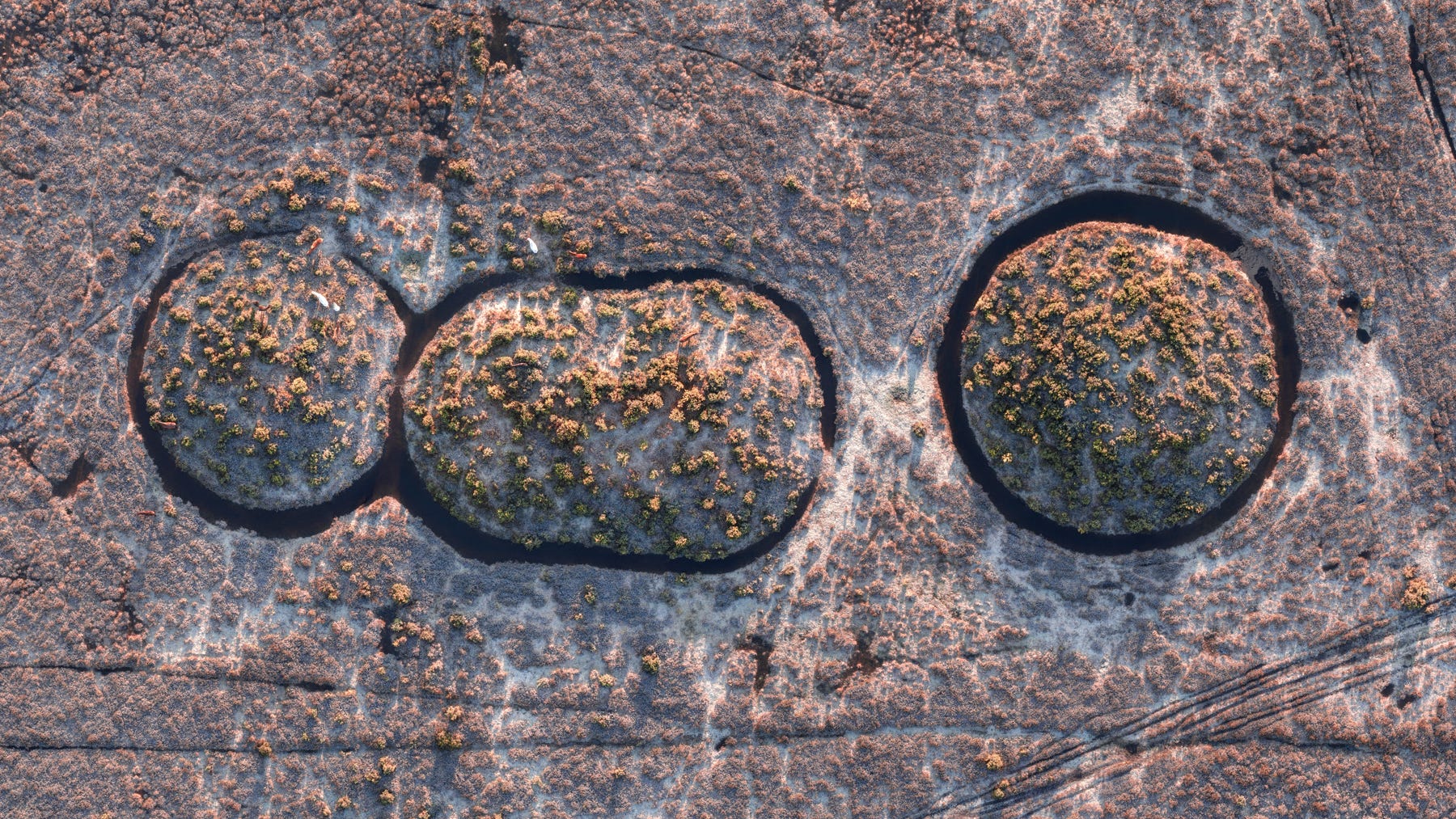
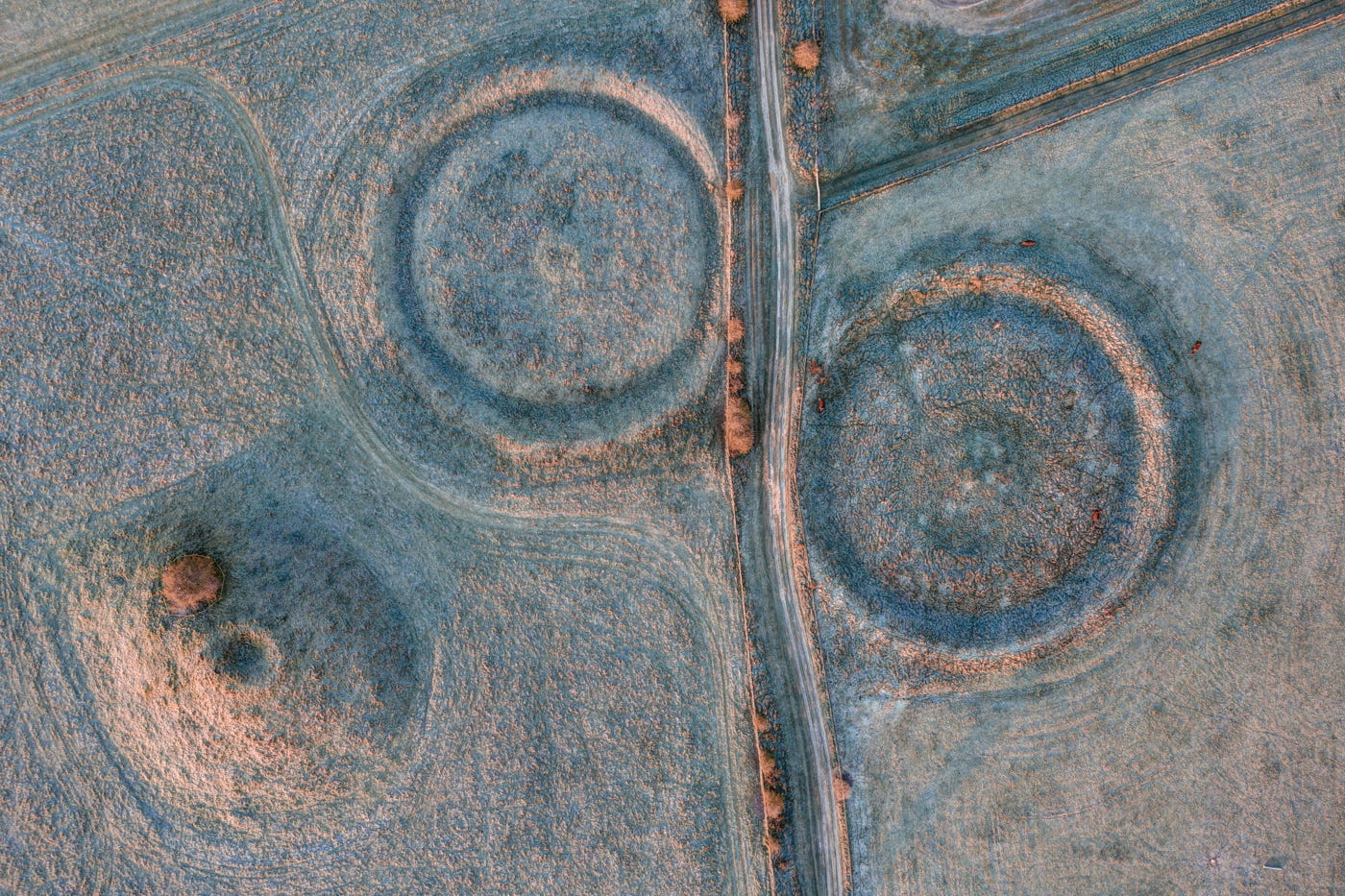
Round barrows from the Early Bronze Age are classified into to five main types: bowl, bell, disc, saucer and pond. Some of the larger cemeteries in upland areas of chalk or limestone hold several of these varieties, but no correlation has thus far been made between the form of mounds and remains interred within them. Some contained a single person; others, the bones or ashes of several people inserted at dates after construction of the original mound. Men, women and children were sometimes buried together.
What factors determined their placement?
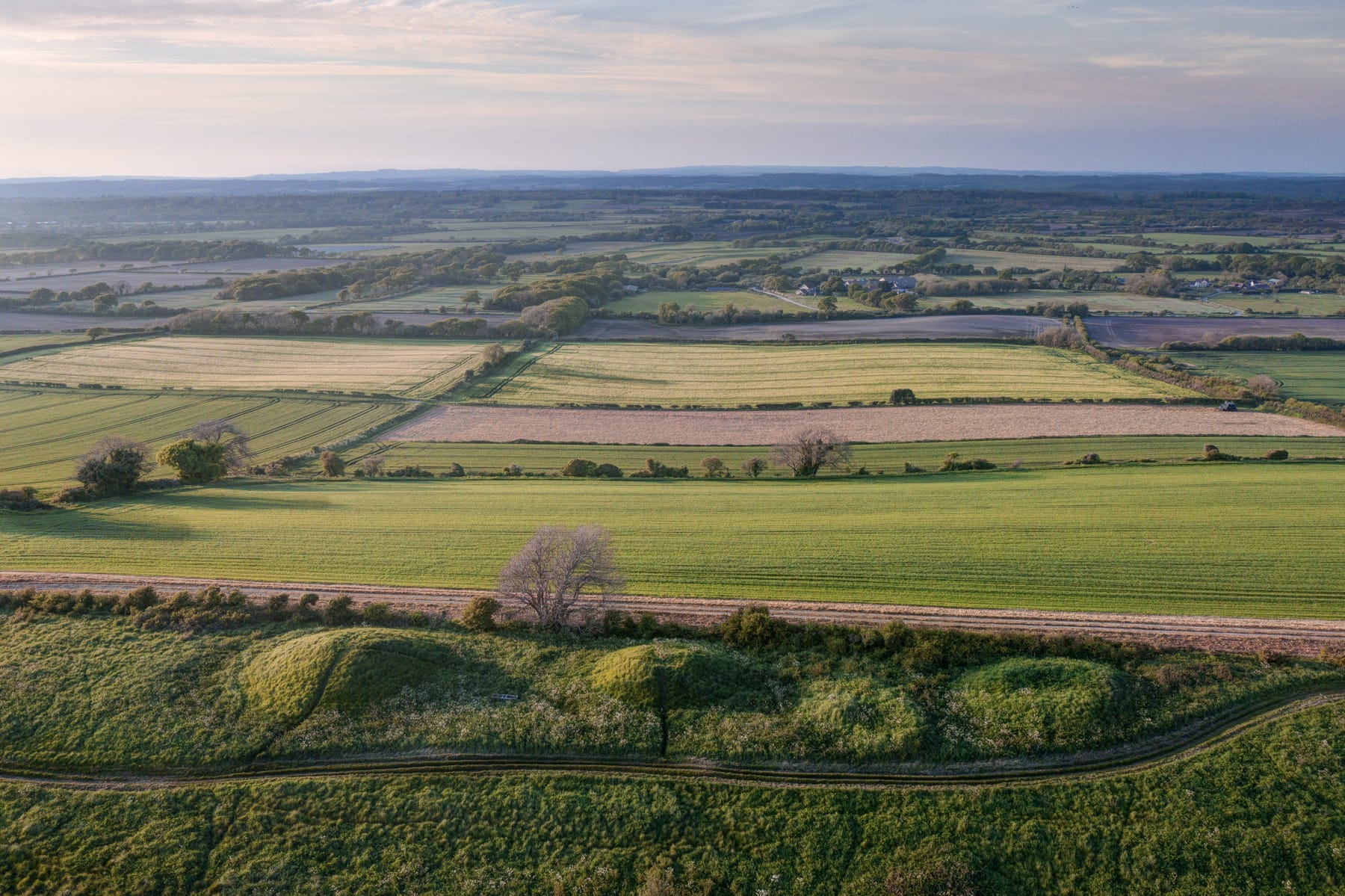
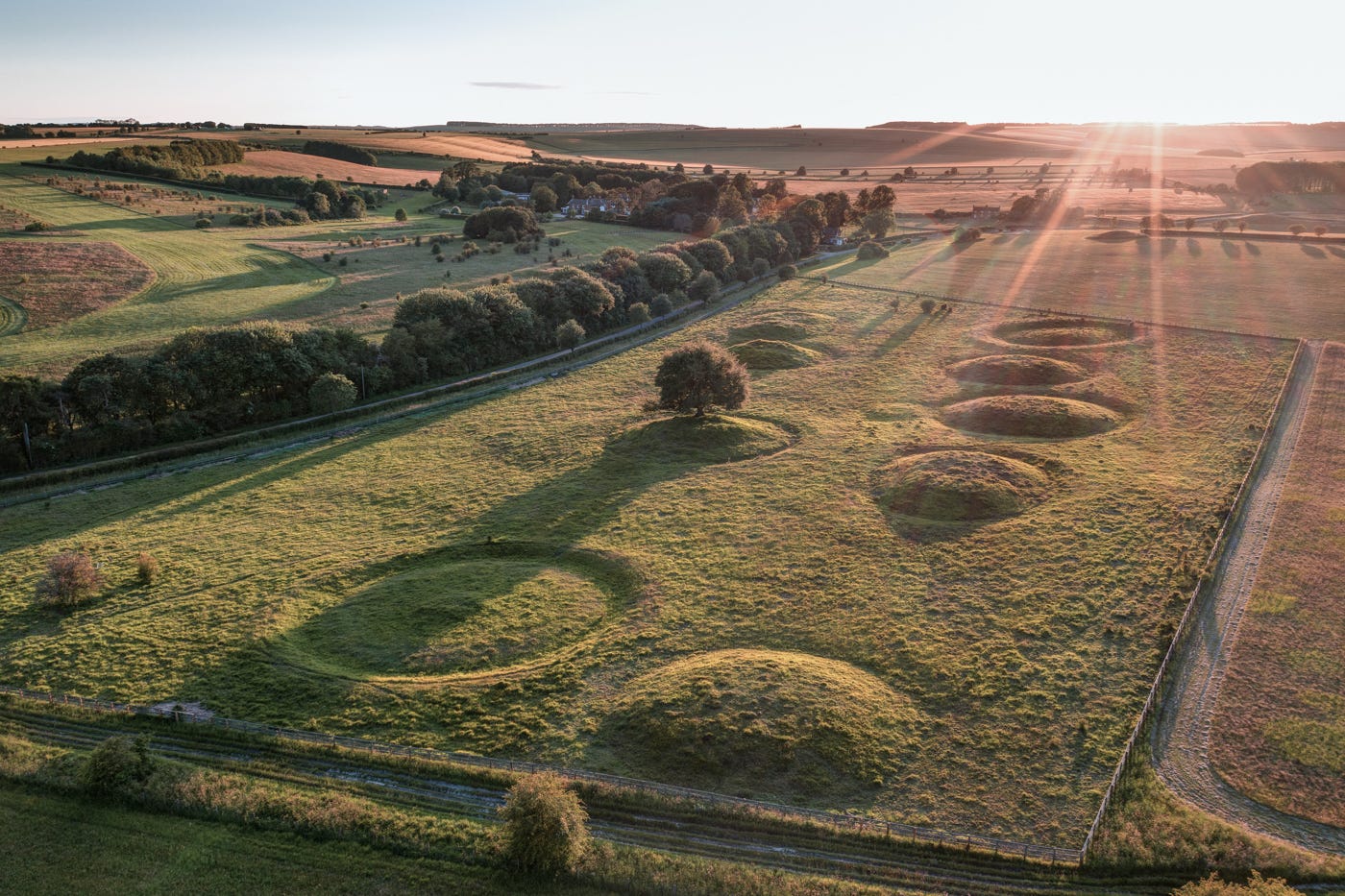
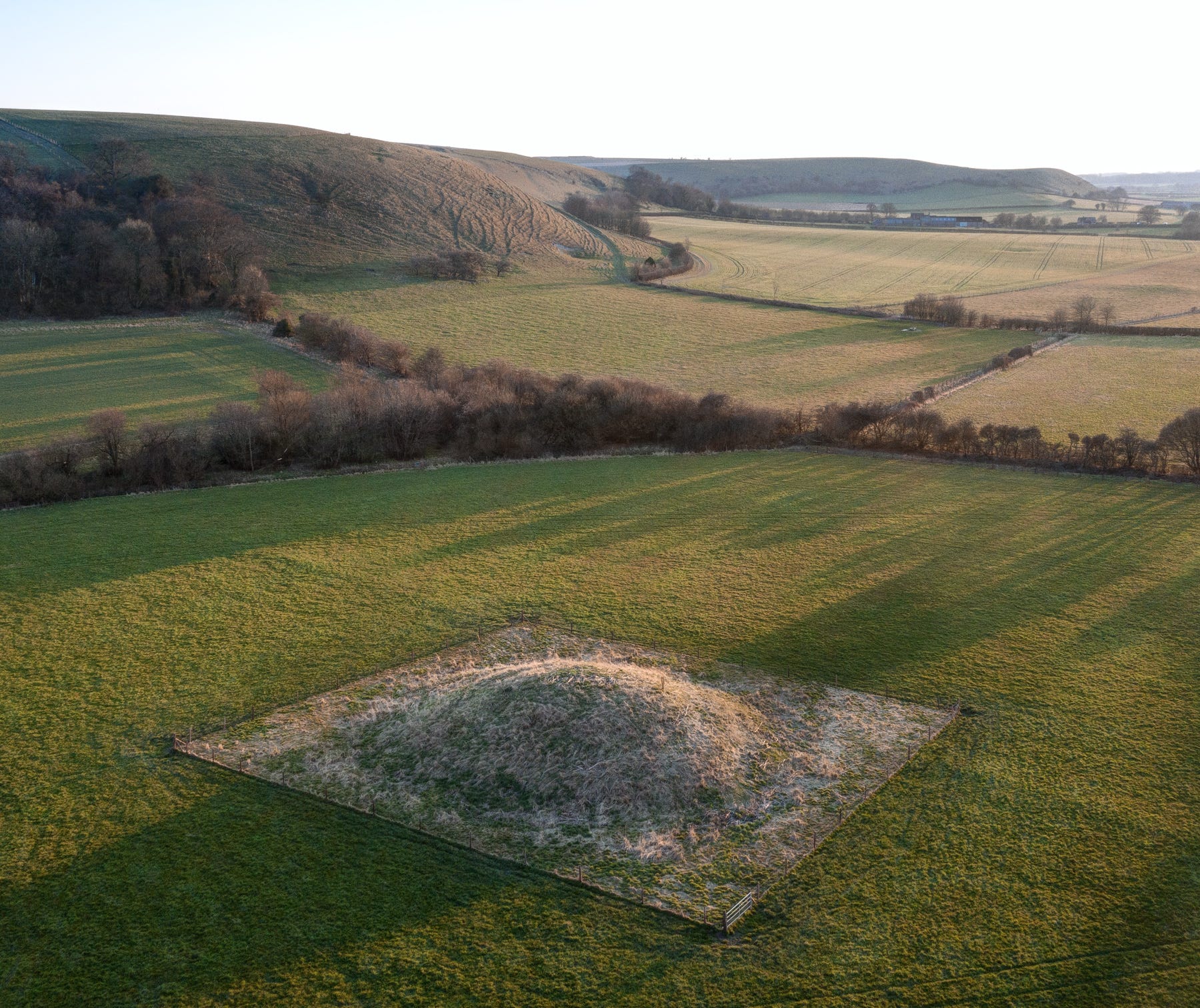
The above image shows an Early Bronze Age barrow cemetery outside the village of Lambourn in Berkshire. It sits on a valley floor flanked by rolling farmland and race horse gallops.
This kind of shallow valley is typical of the region and at first I couldn’t work out why it had been selected as a burial ground. Once the I got the drone in the air, however, it became clear that the proximity of the chalk stream flowing must have been a factor.
Later, I consulted a river map of southern Britain and noticed this stream – the eponymous River Lambourn – flowed southeast through a long and prominent valley to join the River Kennet at Newbury, which later joins the Thames at Reading. Thus the Lambourn formed one of major tributaries of southern Britain’s principal waterway, winding from the fertile chalk uplands to the sea.
This, of course, would have been common knowledge back in the Bronze Age, but today the connection of the Lambourn with the Thames is largely forgotten.
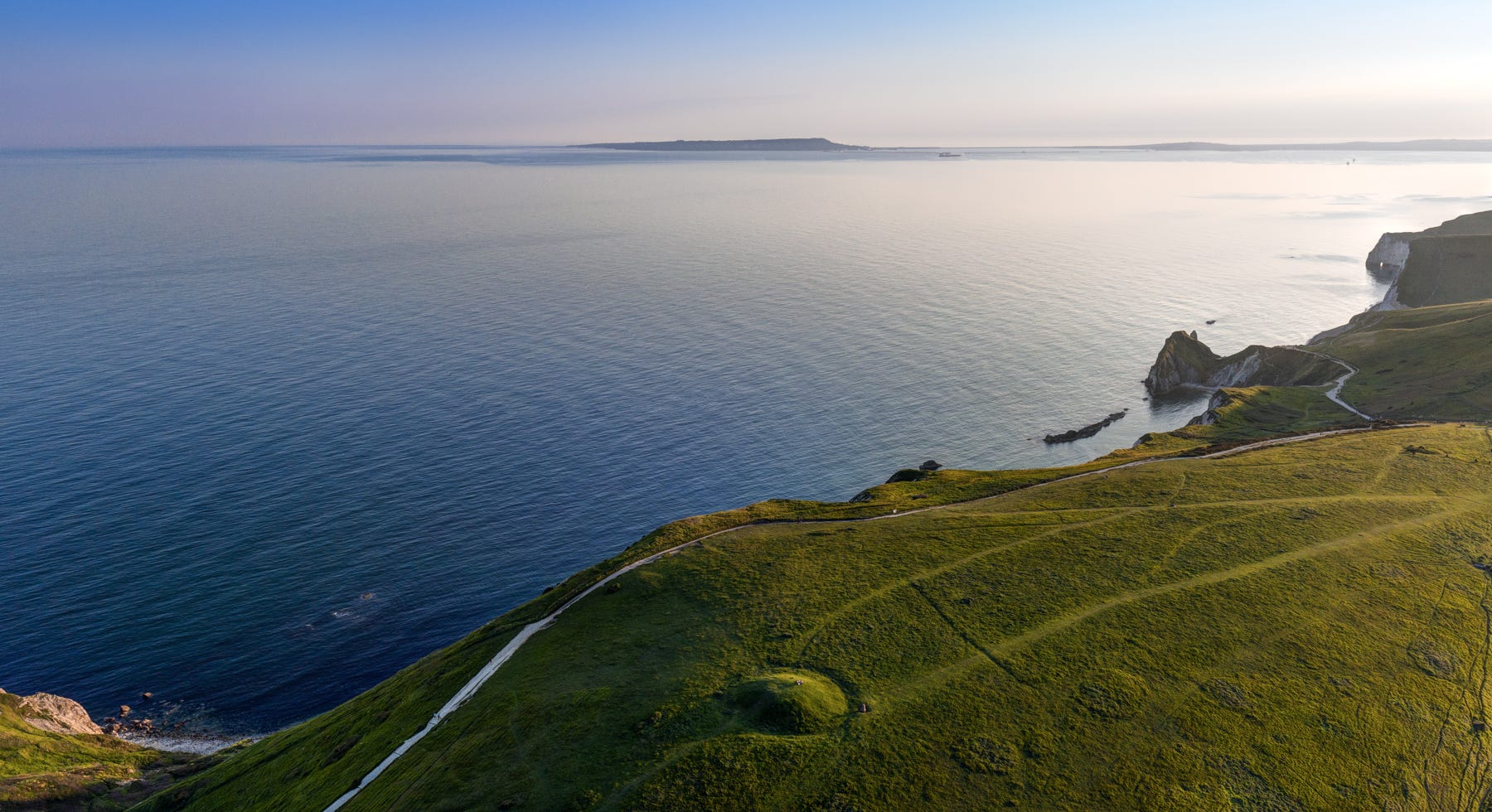
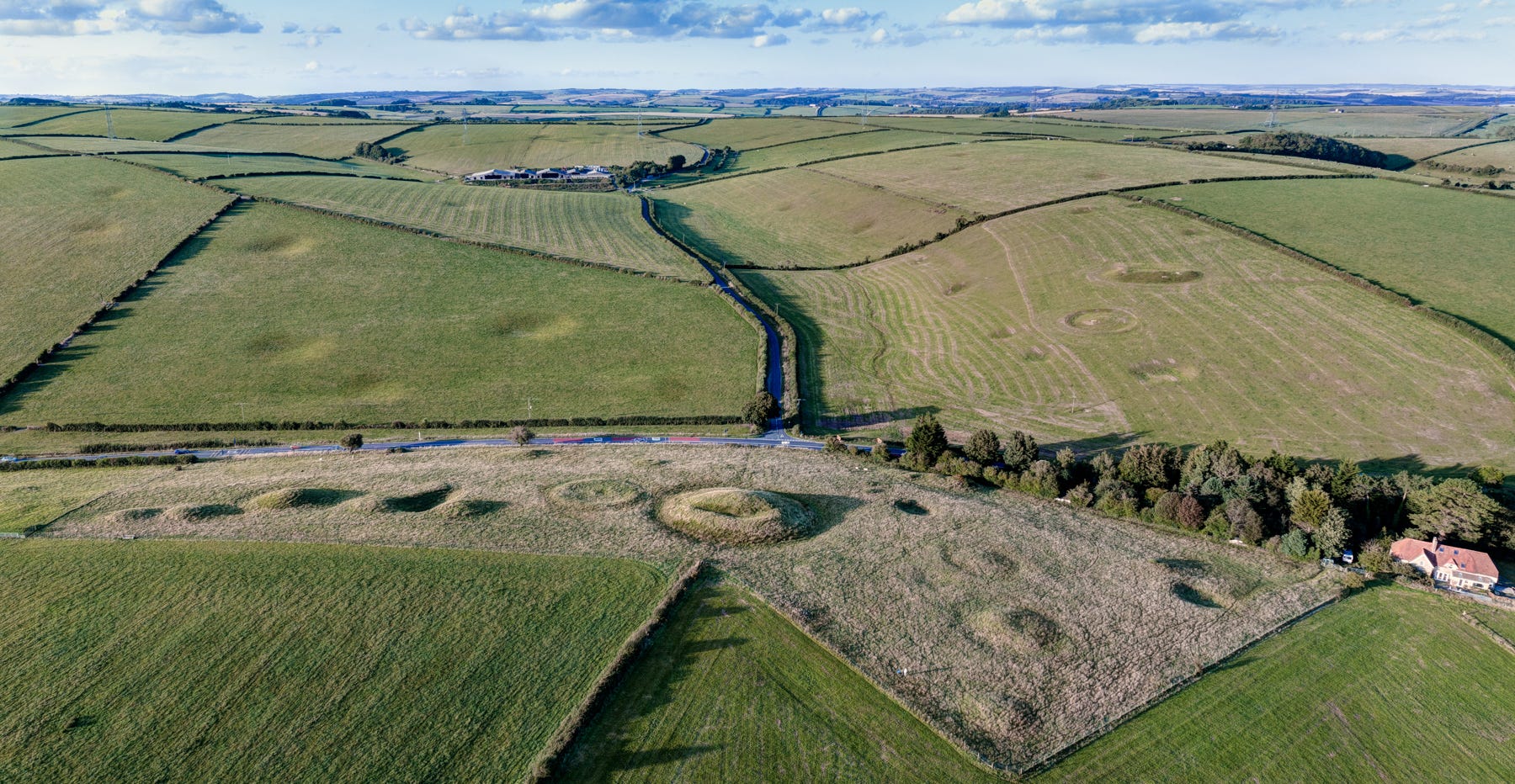
The source or confluences of important rivers were often the focal point of cemeteries from this era. So too were sink holes, cavities worn in the bedrock by rain water. These strange ‘dolines’, as they’re known by geologists, clearly fascinated our Bronze Age ancestors, perhaps because they were seen as liminal places – portals to the Underworld, where chthonic deities entered and left the land of the living.
Two striking examples are to be found in Dorset, on the Ridgeway at Bronkham (near the Hardy Memorial; above) and Poor Lot to the west of Dorchester.
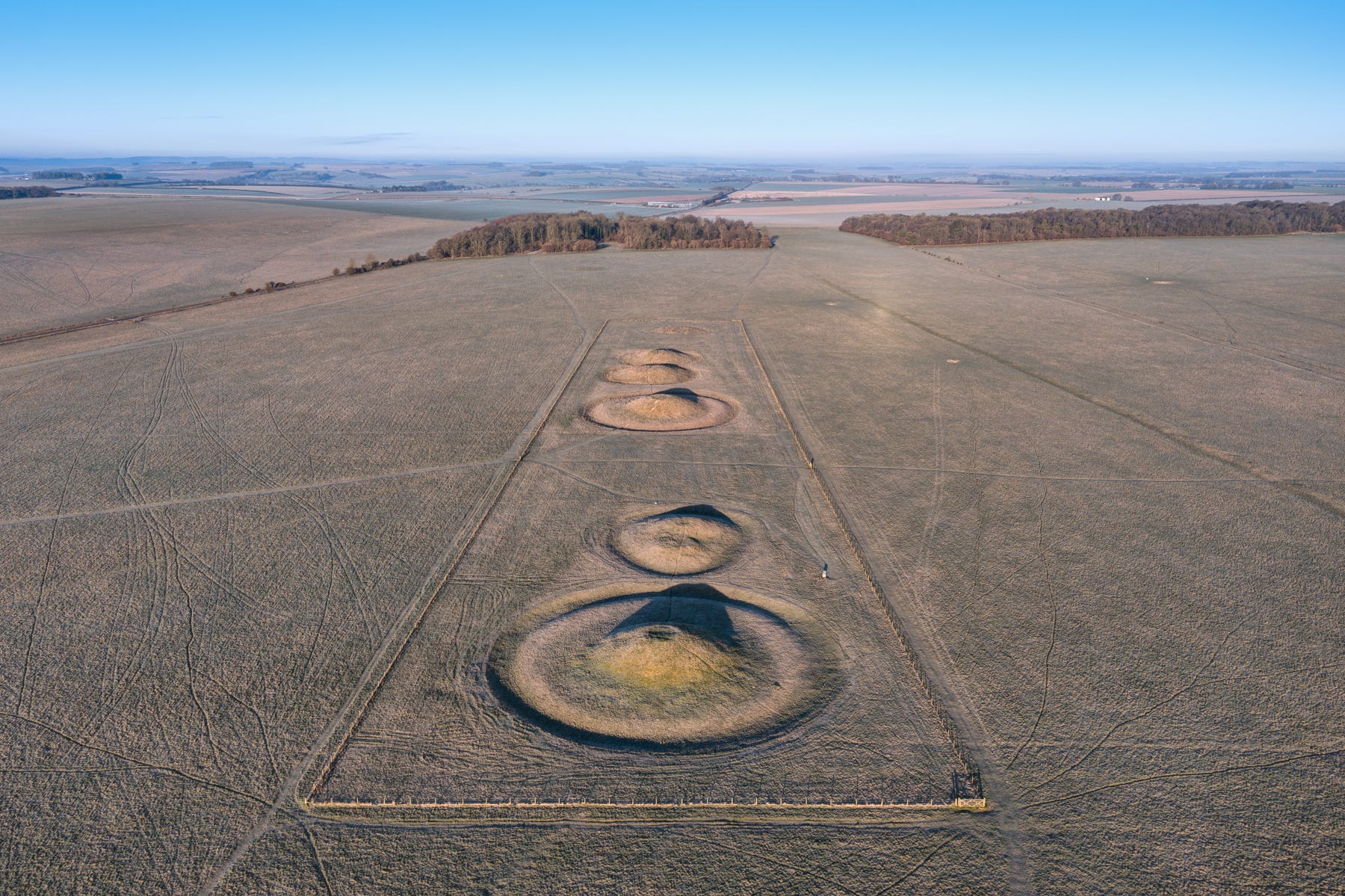
It seems the people in the Early Bronze Age also continued to venerate the places sacred to their Neolithic predecessors. One of Britain’s largest concentrations of barrows, for example, is to be found on the high ground overlooking Stonehenge. The wealth of grave goods discovered in the vicinity (notably the famous ‘Bush Barrow’ to the south of the stone circle) suggests the area may have been reserved for high-status burials.
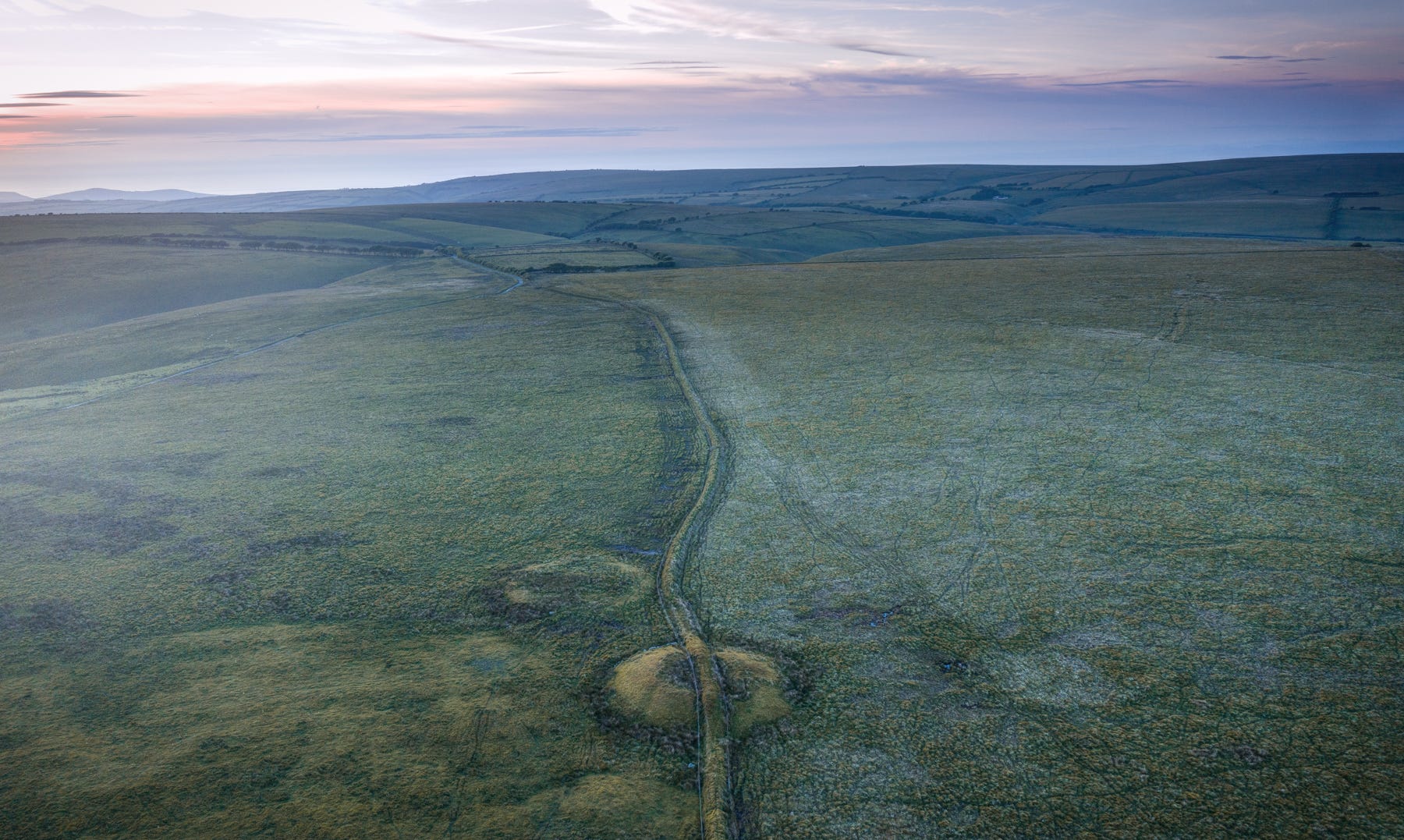
As well as serving as funerary monuments, barrows and cairns would also have marked territorial boundaries. In many upland areas, such as Exmoor and North Yorkshire, they still straddle parish and/or county borders.
It may never be possible to prove, but I’ve come to the conclusion the mounds also provided points in wider mental maps by means of which travellers navigated across landscapes. Sequences of cairns could have featured in verses or lines committed to memory, passed on through the generations, helping people to find their way across unfamiliar terrain.
Where did the practise of barrow building originate?
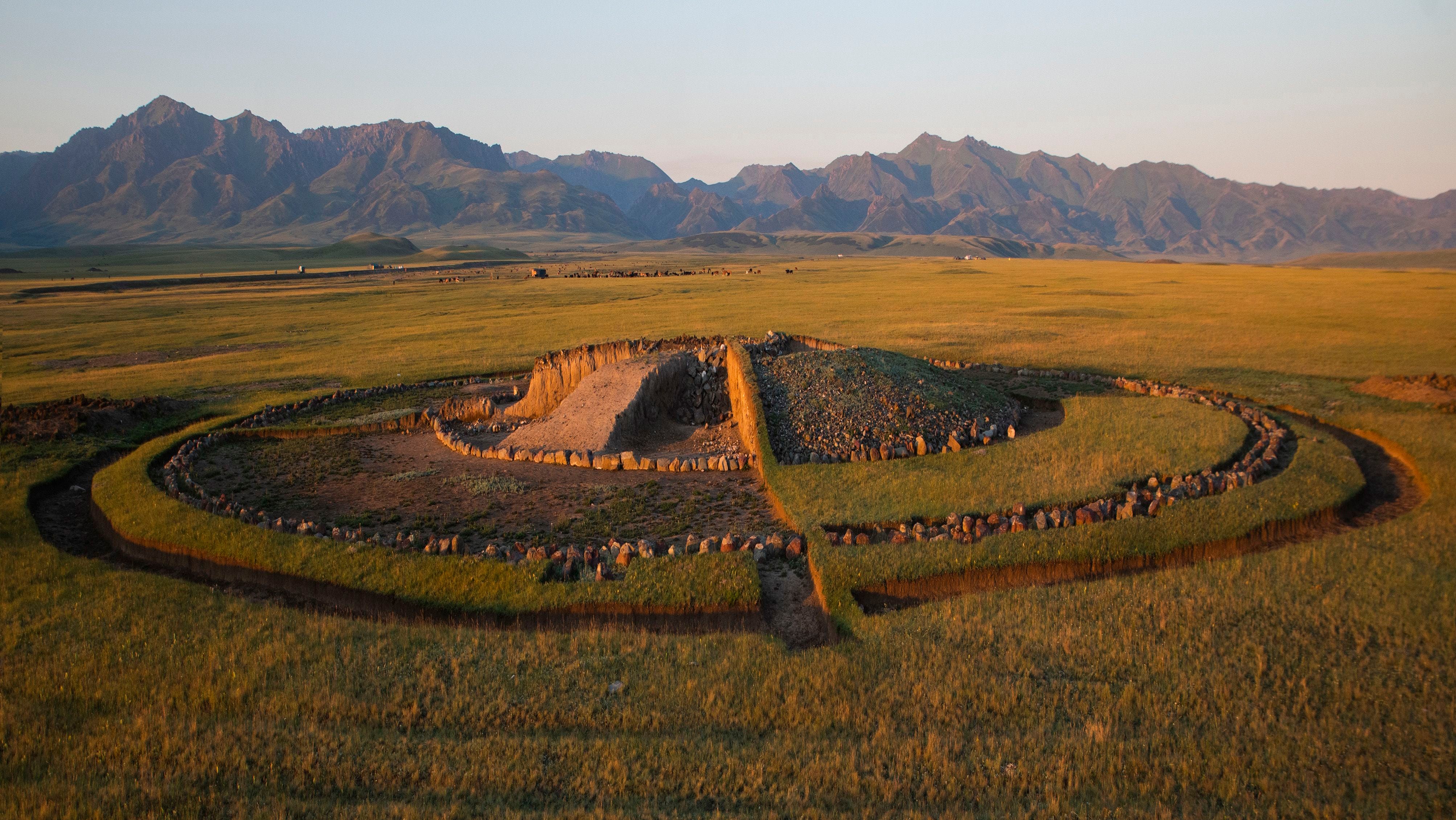
Dotted across the grasslands of Central Asia and Eastern Europe are a collection of great burial mounds known as ‘kurgans’, which, although erected many centuries before, bear more than a passing resemblance to British barrows. The similarity is not coincidental. Descendants of the kurgan builders expanded into northwest Europe during the first half of the third millennium BC, eventually crossing the channel around 2,400BC, bringing with them their ancestral tradition of piling up mounds over graves. These newcomers are also believed to have introduced metal making to Britain and, according to recent DNA research, the gene responsible for lactose tolerance.
Were barrows always as ignored as tend to be today?
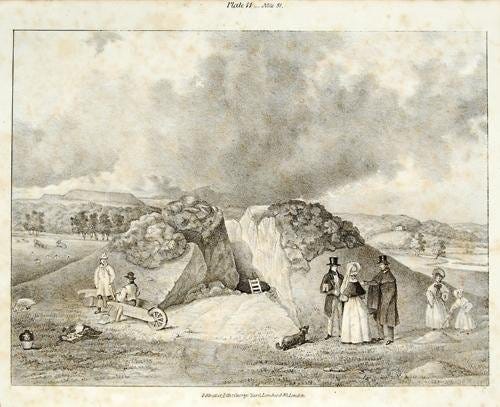
Barrows were widely robbed in the Medieval era, but it wasn’t until the late 18th and early 19th centuries that the mounds became the focus of more serious antiquarian investigation.
The Wiltshire duo, William Cunnington and Sir Richard Colt-Hoare, excavated hundreds across Salisbury Plain in the first decade of the 1800s, meticulously conserving the grave goods they found in them during their excavations (though sadly not the bones). General Pitt Rivers introduced a more systematic approach in later decades, but it was Leslie Grinsell (1907-1995) who conducted the first comprehensive survey, visiting and recording the locations of around 10,000 barrows across southern Britain – a monumental endeavour conducted almost entirely by public transport, bicycle and on foot. It was Grinsell who first noted the similarity between British pond barrows and the palisaded mounds of the Netherlands.
Which are the best barrows or cairns to visit?
Here’s a rundown of some of my favourite Bronze Age barrow and cairns sites in Britain. You’ll find lots more on my website and in my book, The Aerial Atlas of Ancient Britain (published by Thames & Hudson)
Stonehenge, Wiltshire
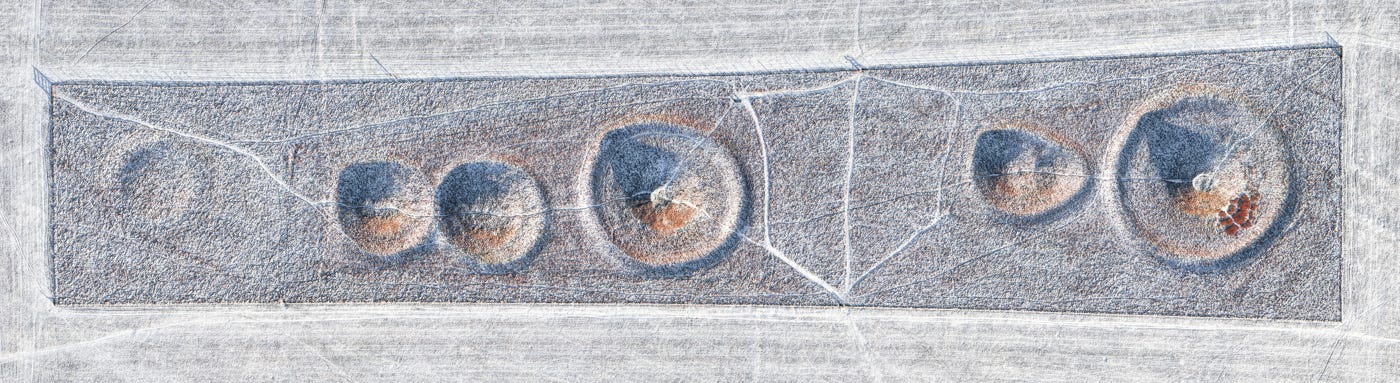
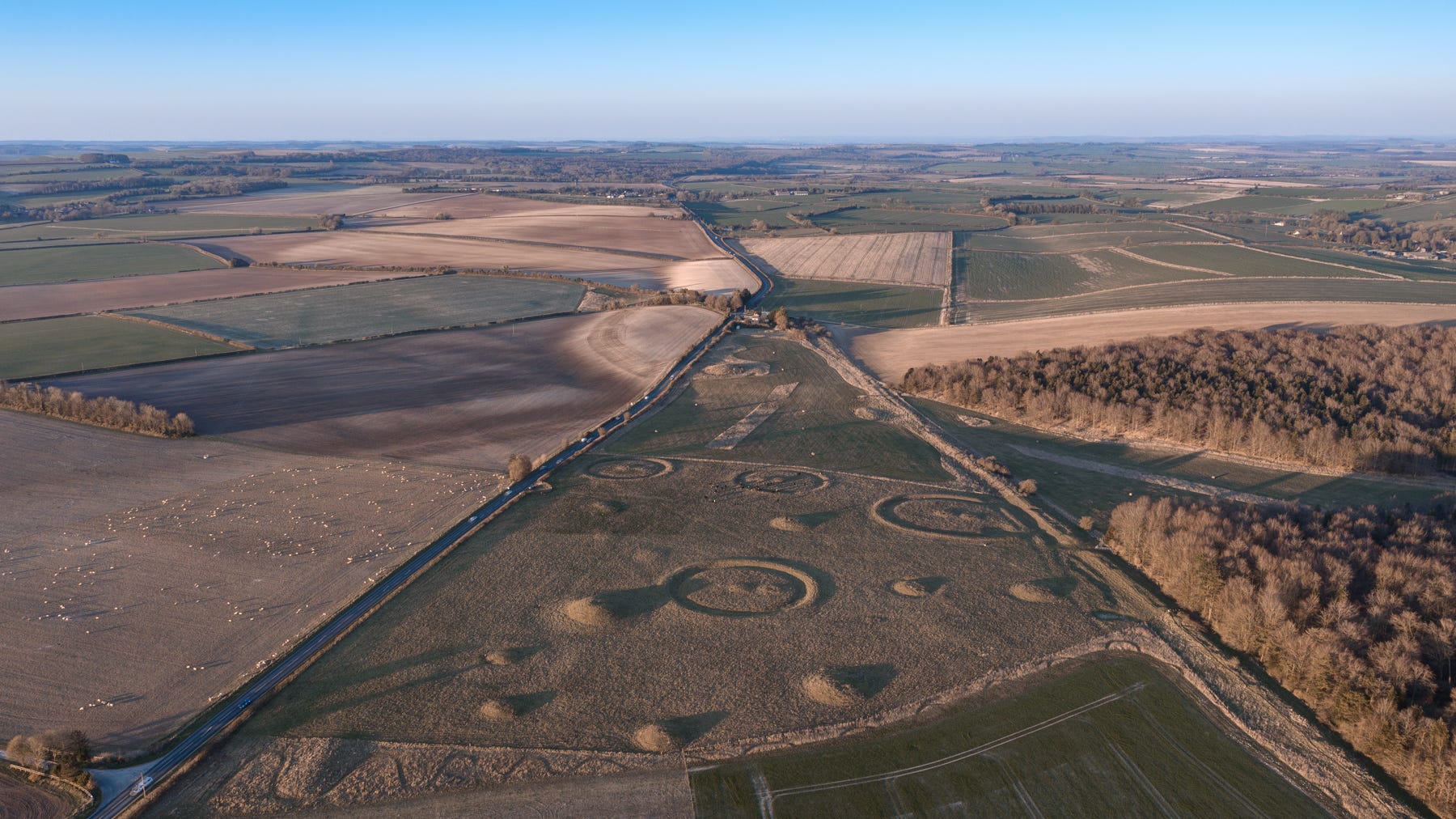
The greatest collection of barrows in the UK is to be found in the fields around Stonehenge. Normanton Down, immediately south of the circle, holds a particularly impressive array, including the famous Bush Barrow (whose treasures are on display in the Wiltshire Museum, Devizes). To the east, the spectacular King’s Barrows adorn a wooded ridge with a great view of the stones, while to the east, the Winterbourne Crossroads cemetery is also worth a visit. My personal favourite, though, is the beautiful Cursus Barrow group (above), fifteen minutes’ walk north of Stonehenge towards Larkhill army camp.
Oakley Down, Dorset
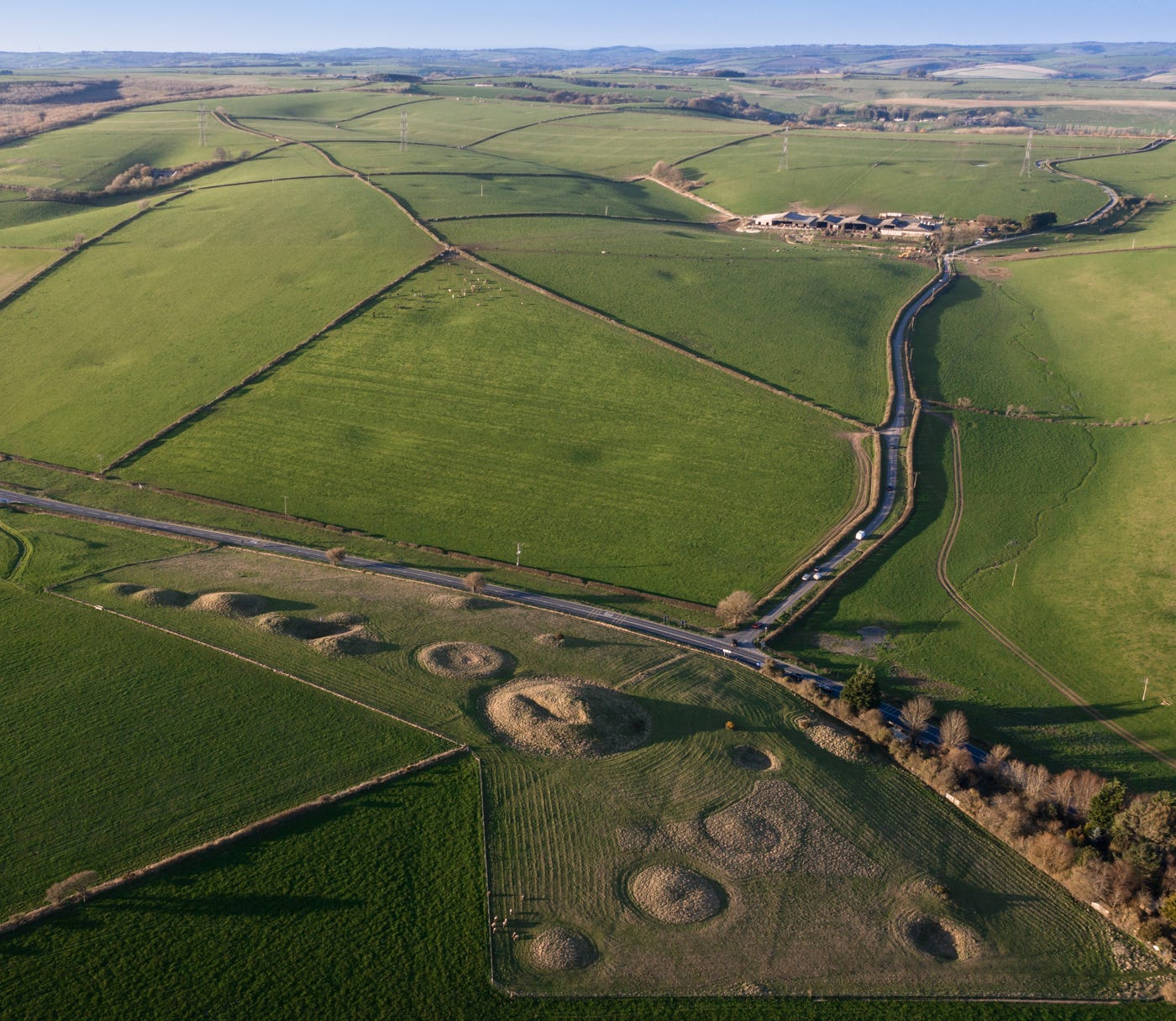
Sliced by a Roman road, this cemetery on Cranborne Chase in Dorset holds all five barrow types: a full flush! It’s on private land but easily accessible from the main road and via the public footpath running along the route of the Ackling Dyke.
Poor Lot, Dorset
Difficult to access, but truly spectacular from the air. The elevated vantage point reveals the connection between the barrows, sink holes and likely location of a long disappeared river confluence (now over-laid by roads).
The Ashen (or ‘Nine’) Barrows, Priddy
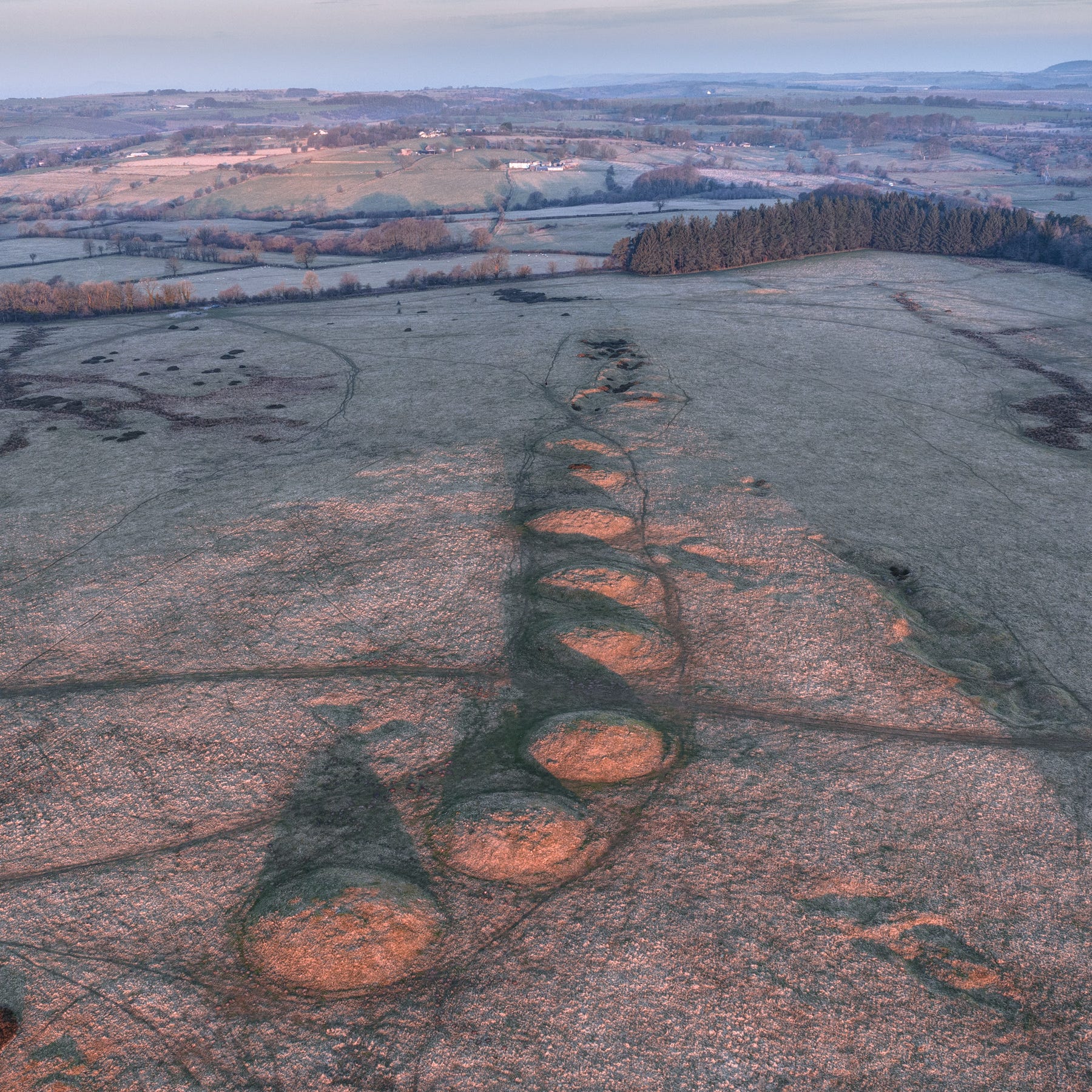
Two rows of large burial mounds flank an area of high bog in the Mendips, close to the village of Priddy – one of Britain’s great Bronze Age spectacles.

Lambourn, Berks
Grinsell is credited with discovering this wonderful barrow cemetery in West Berkshire, which sits at the head of one of the Thames’ tributaries amid bucolic chalkland scenery.
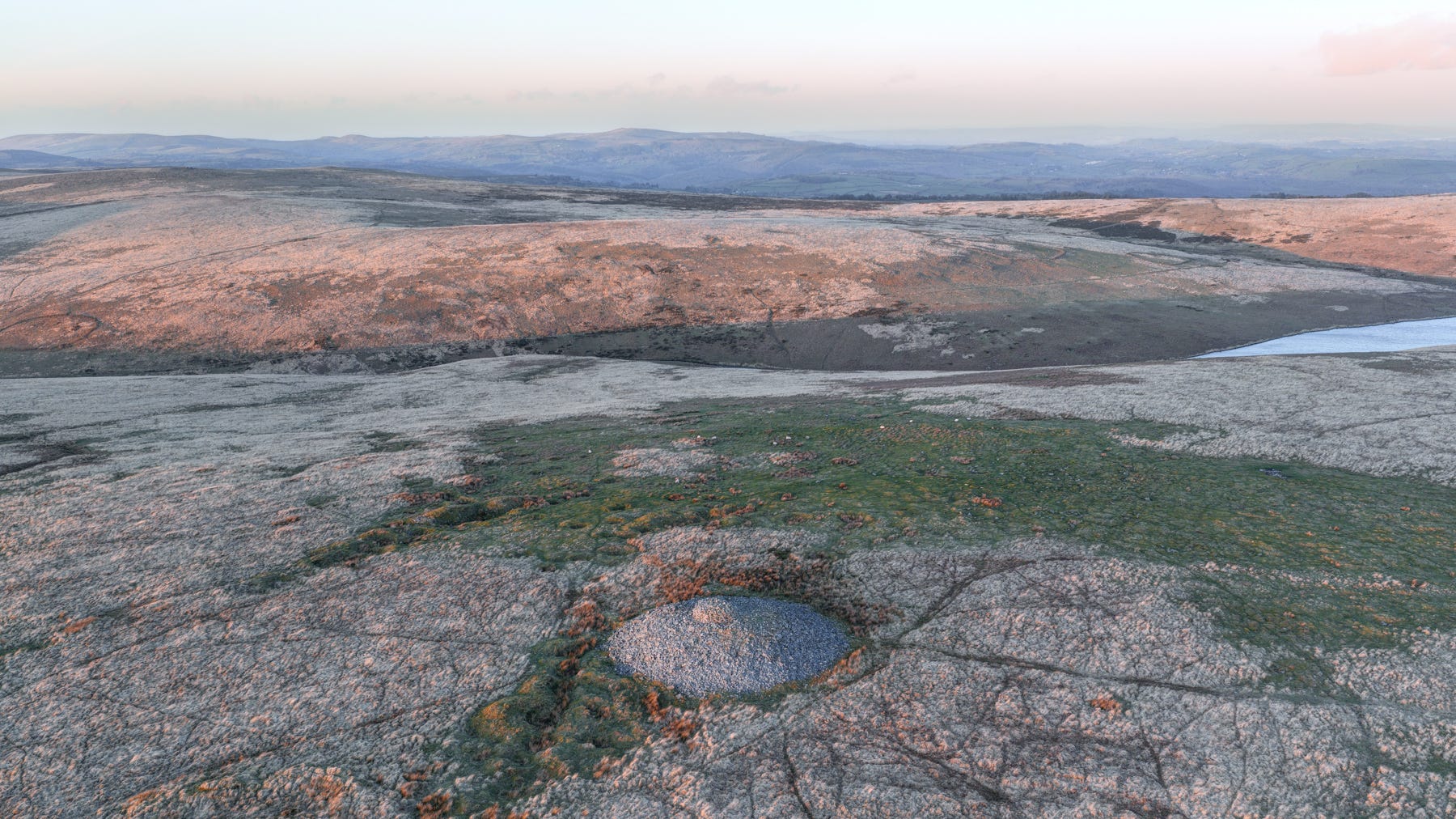
Foel Drygarn, Pembrokeshire
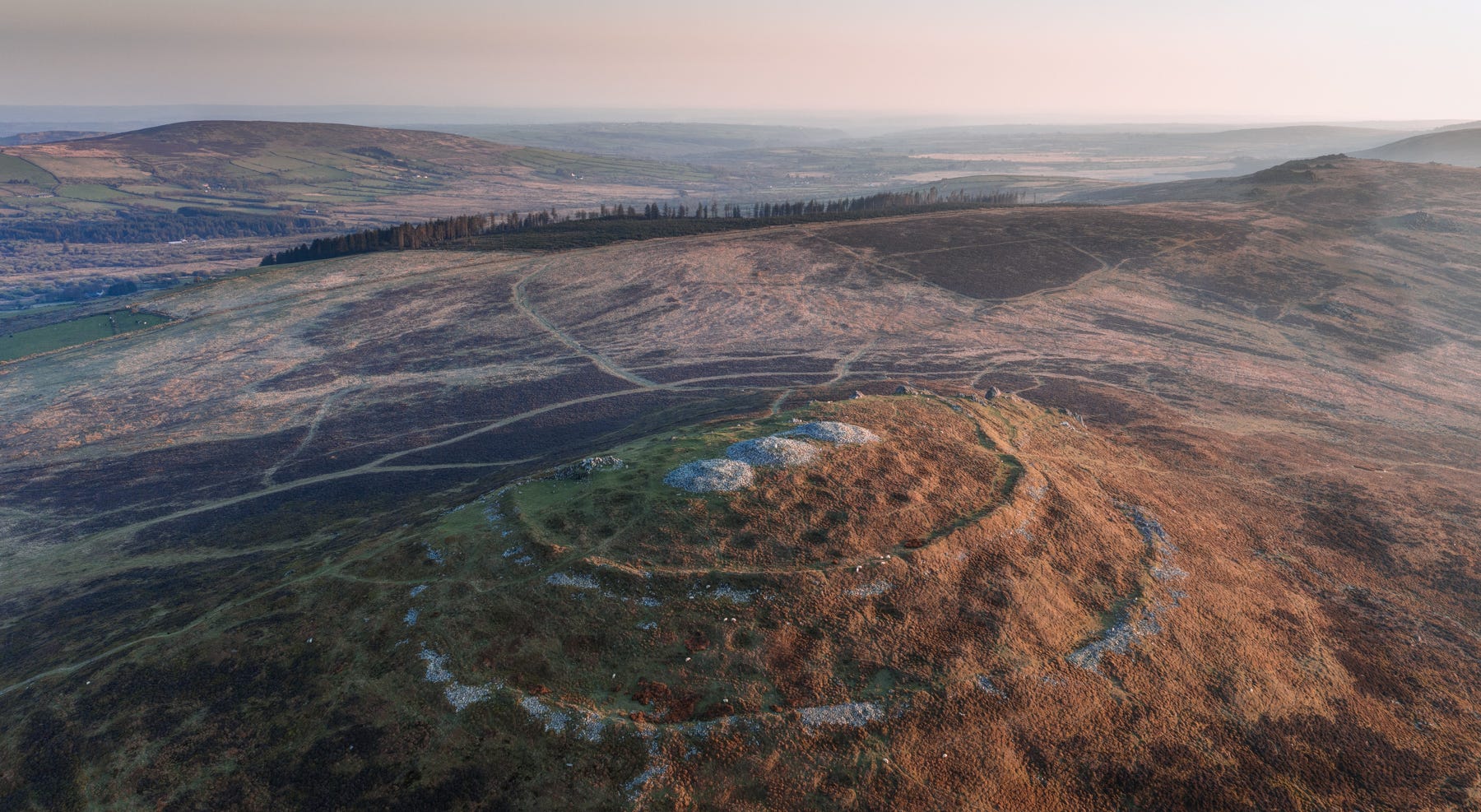
This trio of enormous cairns presides the high moorland from where the famous ‘bluestones’ erected at Stonehenge originated.
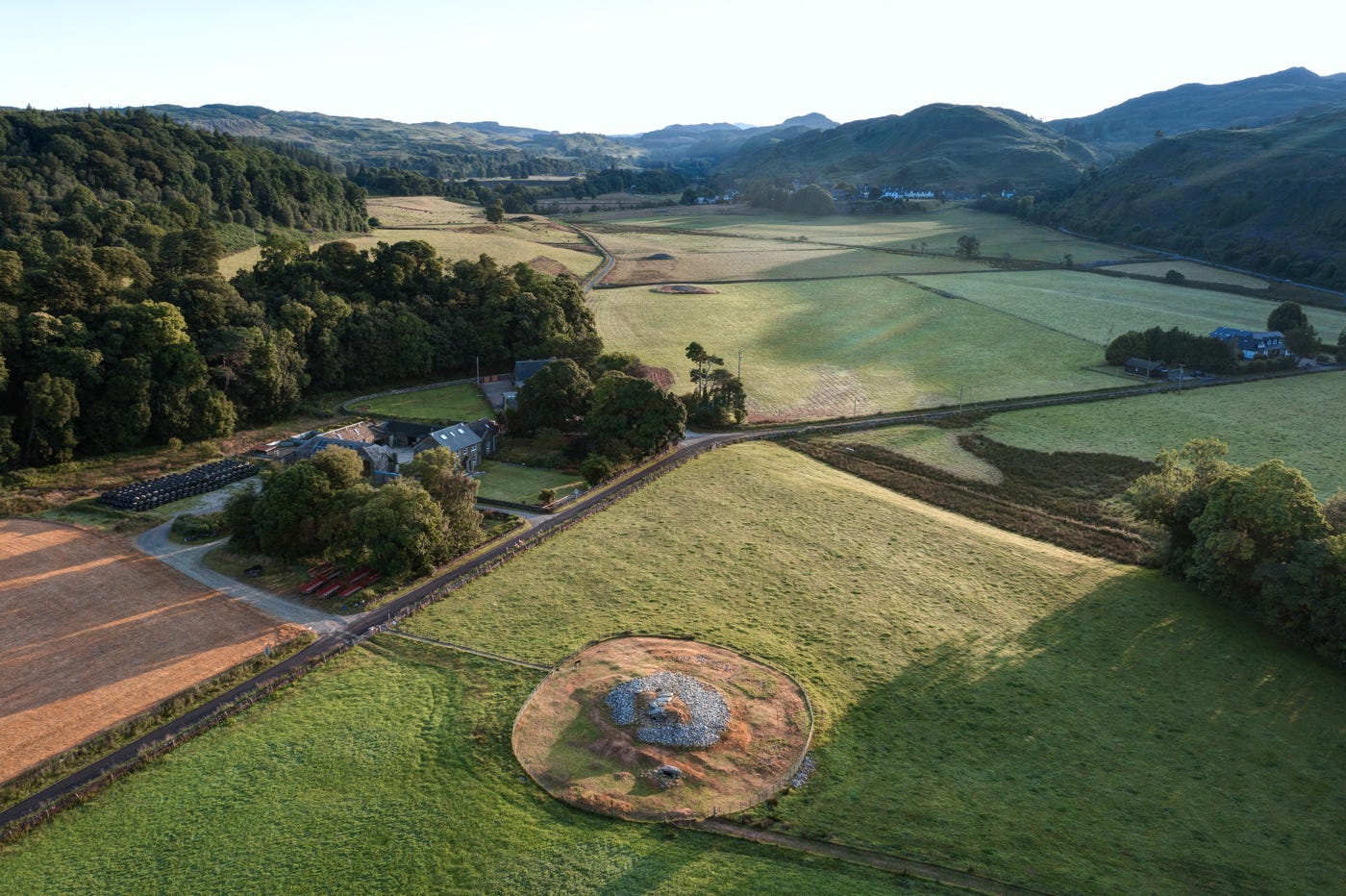
Kilmartin Glen, Argyll
Scotland boasts a rich array of stone-built cairns in a variety of styles, but these, in a secluded glen to the south of Oban, are the pick of the crop.
Thanks
Thank you for reading to the end of this article. If you enjoyed it, please give it a like and share with friends and family members.
The pictures featured here will eventually be included in a collection of photographs I’m compiling for publication. I’ve still some way to go before the project is complete, but watch this space for updates. In the meantime, you can discover lots more Early Bronze Age barrow sites, and learn about their context, in my book, the Aerial Atlas of Ancient Britain, which has just been reprinted. Signed copies are now available via my online shop here.
David, as an Englishman who now lives abroad and who has a deep interest in this area, I just wanted to say how much I appreciate your posts here.
It's possibly the only thing that I really miss about leaving England: walking along the Ridgeway and feeling close to our ancestors. I used to go fishing on the River Avon, just near the Durrington Circle, so I often took the opportunity to visit sites around Stonehenge and up towards Avebury.
Here in Greece, I live not far from Theopetra (a cave with a wall across the entrance which is said to be the oldest known construction by hominids) and overlooking Sesklo, which I've seen described as the longest continually inhabited settlement in the Mediterranean basin, going back to about 9,000 BCE. But…great as those places are, they are still not quite the same as barrows in the chalk uplands of SW Britain.
So, thanks for this post in particular, and I look forward to the book.
Best wishes
Jolyon
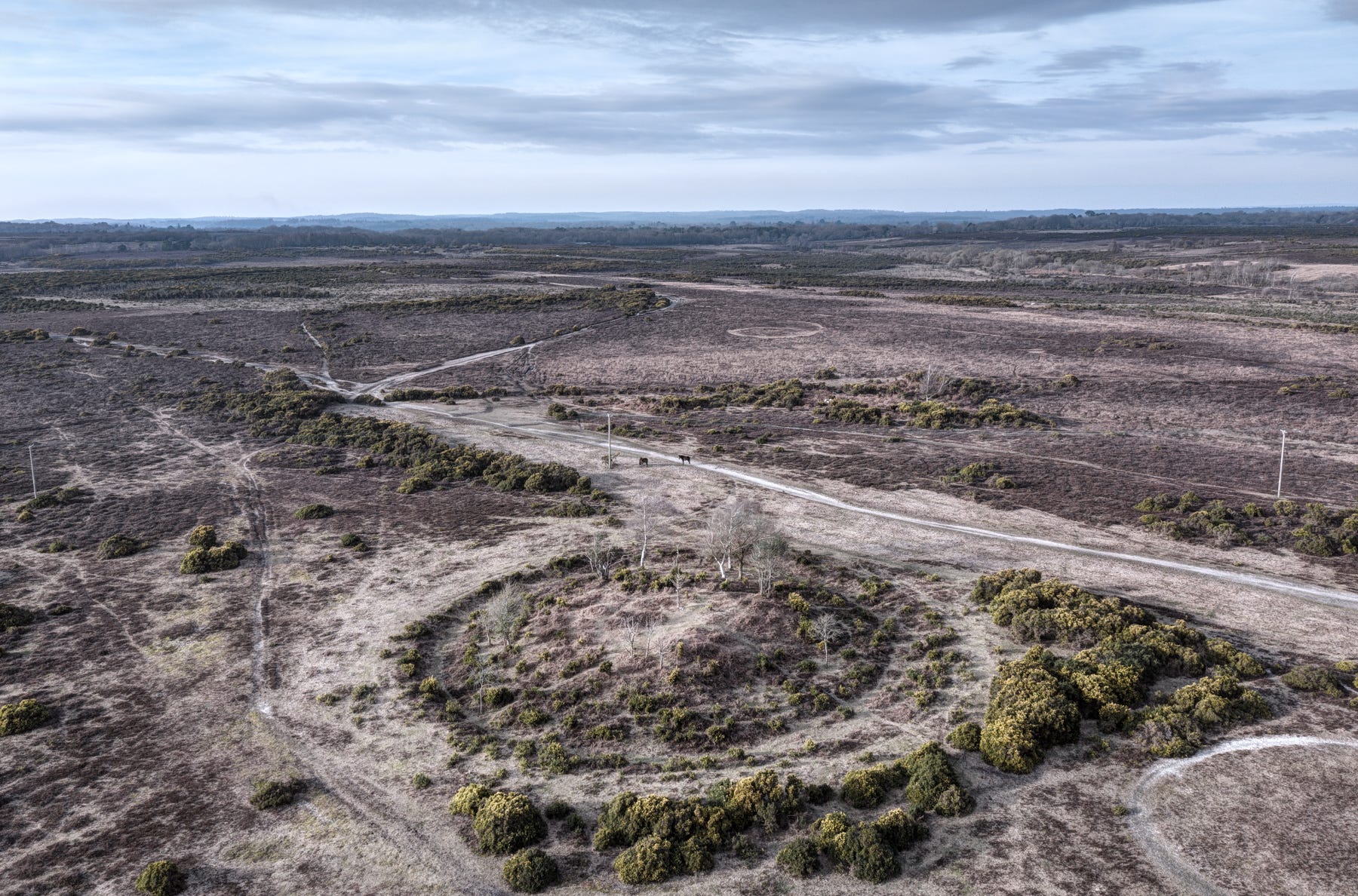
I think round barrows might be my favourite type of prehistoric structure too! I love being a passenger in the car and shouting "barrows!" On the journey down into Dorset. There are some at Petersfield Heath in Hampshire that are rather unexpected being in amongst the trees and gorse but quite spectacular too. I was very fond of going to Hetty Pegler’s Tump in Gloucestershire when I was little, we would take a torch and crawl in.. I didn’t know Twmp was Welsh but that makes sense overlooking the Severn valley, although Hetty Pegler’s is a long barrow, it just seems round!